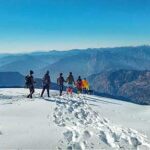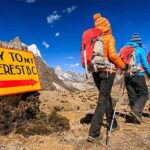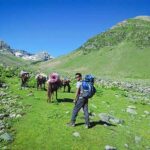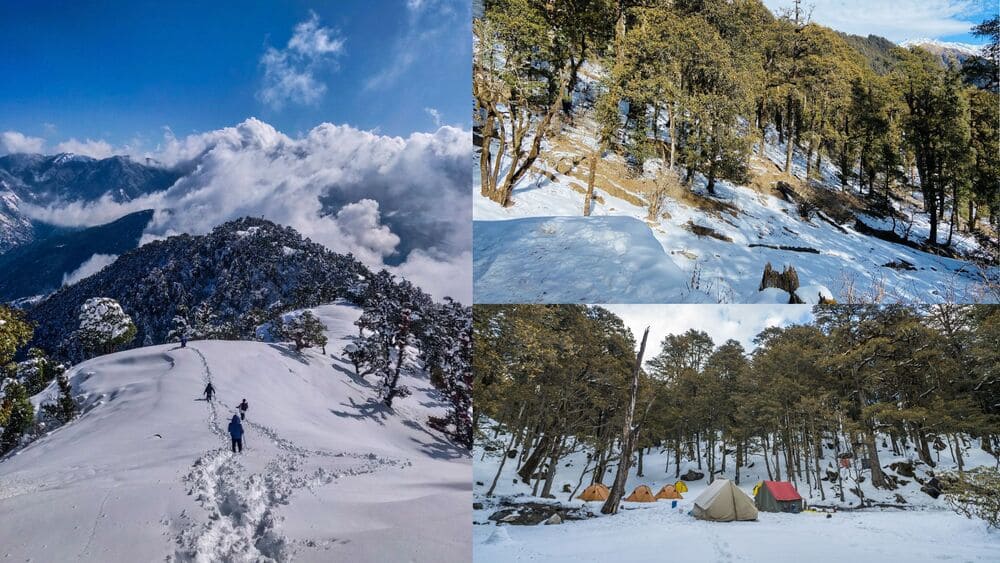
You probably know how crowded Kedarkantha Trek has become; long registration lists, packed campsites, and bustling base-camps even before sunrise.
While the snow-clad trails and alpine views lure many, the sheer volume of trekkers often dilutes the serenity and raw Himalayan magic that you sought. Moreover, when you reach Kedarkantha summit or a meadow and find dozens of trekkers around, the moment feels less personal.
At the same time, you crave sweeping white meadows, frosted forests, silent nights under stars, and panoramic Himalayan vistas, but without the rush, chaos or compromises. You want to connect with the Kedarkantha Trek mountains on your own terms.
This is why it’s worth exploring lesser-known winter treks that offer untouched landscapes, quieter trails, and real Himalayan tranquillity like the Kedarkantha Trek.
Considering that, in this blog, I discuss five excellent alternatives to Kedarkantha Treks; all are winter-ready, scenic and far less crowded. I have choosed these alternative treks based on my trekking experience, detailed research, and other trekkers reviews.
1. Dayara Bugyal Trek
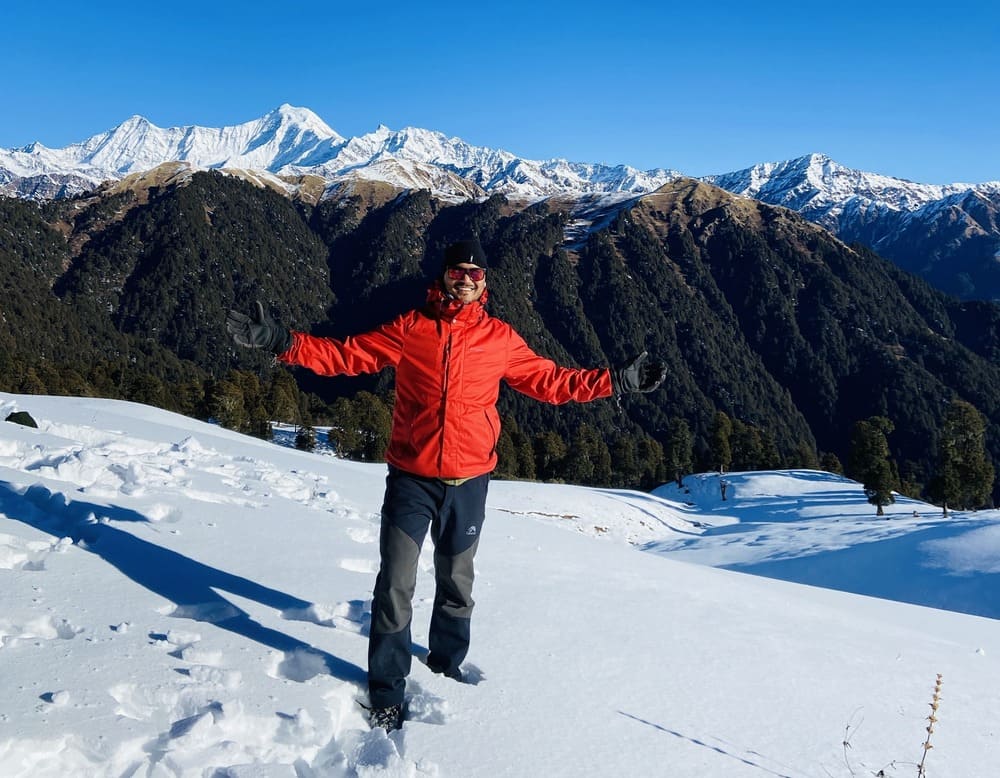
While Kedarkantha Trek is one of India’s most popular winter treks, its popularity has also made it crowded during the peak season. Dayara Bugyal Trek, on the other hand, offers a quieter and more serene Himalayan experience without compromising on winter beauty.
Furthermore, Kedarkantha Trek is known for its summit climb, pine forests, and snow-covered campsites. However, the trail often gets busy with large groups, long queue-like summit pushes, and packed campsites around Juda Ka Talab and the base of the peak. This sometimes affects the sense of isolation and raw mountain charm trekkers look for in winter.
Dayara Bugyal Trek provides a refreshing contrast. It delivers equally stunning winter scenery but with far more open space and silence. The snow meadows here are much wider than anything on the Kedarkantha trail. Instead of crowds, you walk through peaceful oak and maple forests and then step into vast, untouched alpine meadows that feel almost endless.
Additionally, the trek is less demanding. Kedarkantha’s summit day can feel steep, especially for beginners, while Dayara Bugyal Trek spreads its altitude gain more gradually. Despite being easier, the rewards are surprisingly grand — frozen lakes, panoramic mountain views, and massive snowfields that stretch across acres.
And this is something I personally felt.
When I ventured on this trek in January 2024, I was genuinely surprised by the views and the surprisingly low crowd, even during the long Republic Day weekend. Walking quietly through the forest felt thrilling and adventurous, with only the sound of snow crunching beneath our feet. Reaching the summit ridge with just my group around me created a rare sense of peacefulness. It gave me and my friends the space to immerse ourselves in the beauty of the Himalayas and enjoy it to the fullest without feeling rushed or surrounded by noise.
So, if you want snow-covered landscapes, crisp winter air, beautiful forest trails, and uninterrupted Himalayan scenery without the crowd that Kedarkantha now attracts, Dayara Bugyal Trek stands out as one of the best alternatives available today.
2. Brahmatal Trek
Brahmatal Trek stands out as one of the strongest alternatives to Kedarkantha Trek because it offers something Kedarkantha Trek cannot; spectacular frozen lakes and grander Himalayan views.
While Kedarkantha Trek offers a beautiful summit ridge, the Brahmatal trail gives sweeping views of Mt. Trishul, Mt. Nanda Ghunti, and the Roopkund belt right from the trail and campsites.
Moreover, Kedarkantha Trek often becomes crowded during winter, especially around the summit push. In contrast, Brahmatal Trek spreads trekkers across a wider landscape, so it feels calmer and more immersive. The forest sections here are also denser and more dramatic, with snow settling beautifully on oak and rhododendron trees.
Yet the biggest highlight remains Brahmatal Lake and Bekaltal. Both lakes freeze beautifully in winter, turning into surreal icy landscapes. Walking around these frozen lakes under crisp skies and still air offers a kind of winter magic that Kedarkantha doesn’t provide. It is a rare blend of solitude, reflective beauty, and high-altitude charm.
My personal experience with this trek makes it even more special.
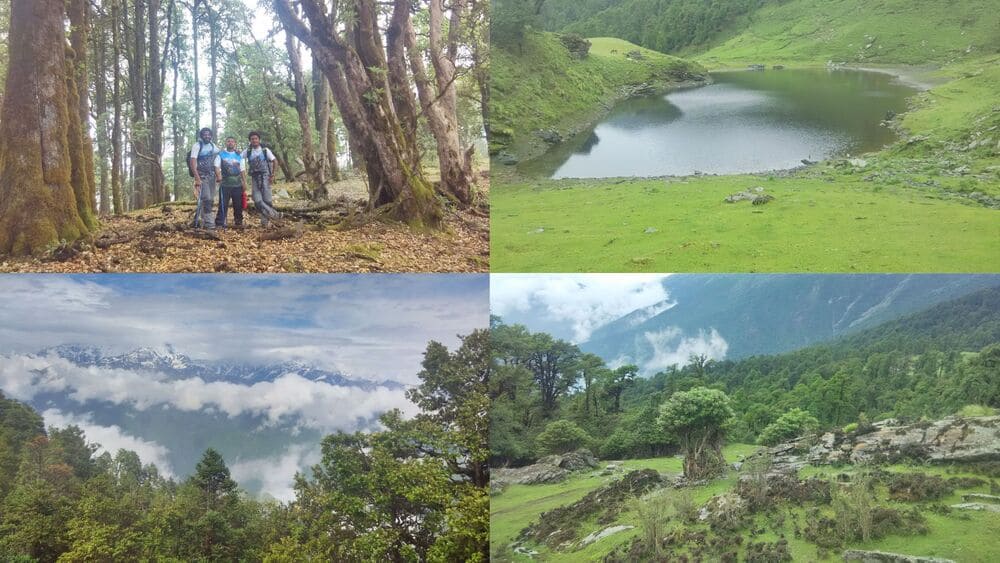
I explored Brahmatal long before it became popular as a winter trek. At that time, I was running Roopkund treks, and on a free weekend, I went exploring with a few local friends. The moment I reached the ridge near Brahmatal Lake, I was stunned. The snow-clad Himalayan peaks stood like giants in front of me, and the sweeping meadows looked endless. What surprised me even more was that I could see the entire Roopkund trail from that ridge — a view I never expected.
I still remember thinking how unbelievable it was that so few people knew about this trail. Back then, I never imagined Brahmatal would evolve into one of India’s finest winter treks. Later, when my team explored Brahmatal again in winter, they too were amazed by the experience — the frozen lake, the ridge views, and the raw beauty of the landscape. You can also predict the same from following photos.
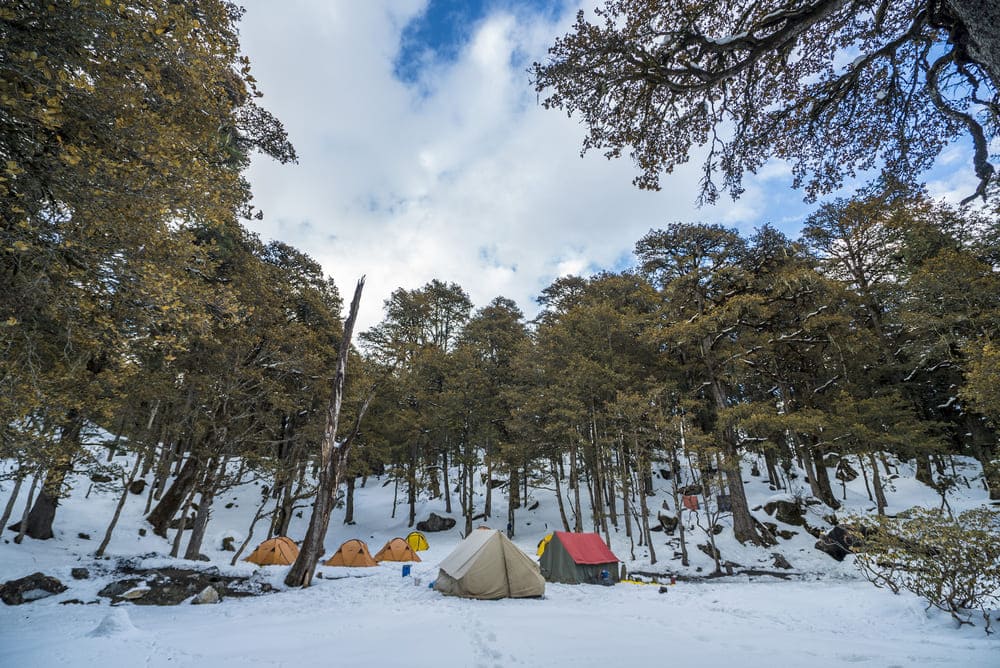
On the whole, if you want bigger mountain views, frozen alpine lakes, dense forests, and a quieter experience, Brahmatal is a compelling and well-rounded alternative to Kedarkantha Trek; offering everything a winter trekker hopes for, and more.
3. Kuari Pass Trek
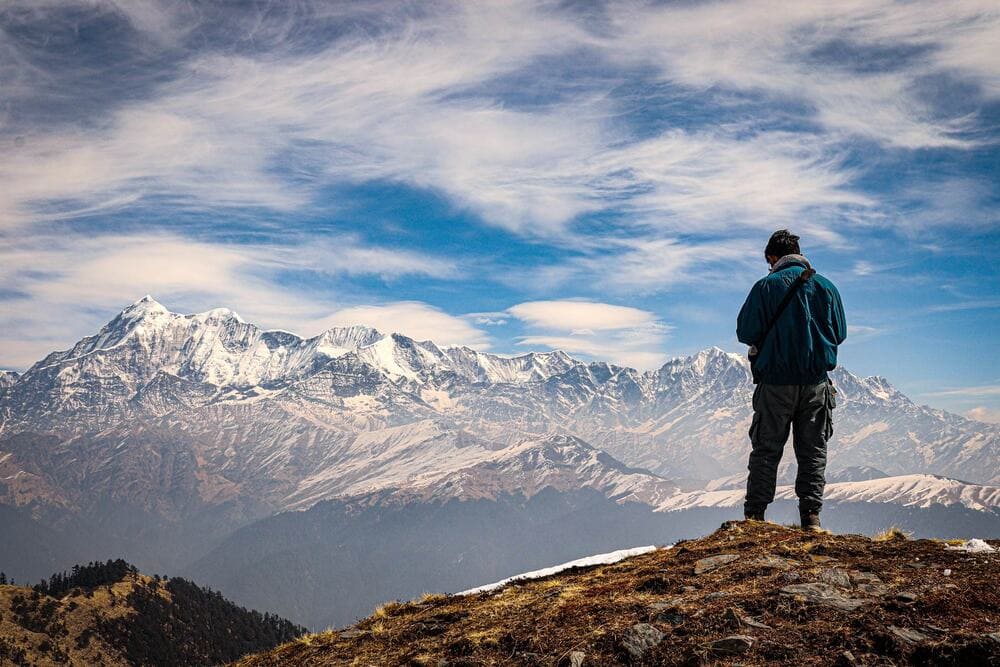
Kuari Pass Trek is third on my list. It is a classic winter trek and a fantastic alternative because it delivers one of the grandest mountain panoramas in India.
That said, while Kedarkantha offers views of Swargarohini and surrounding peaks, Kuari Pass Trek opens up astonishing close-ups of Mt. Nanda Devi, Kamet, Dronagiri, Hathi-Ghoda, Chaukhamba, and many more; a far more dramatic skyline.
The forest experience is also richer on Kuari Pass Trek. Oak and rhododendron forests create long, quiet stretches with snow-draped canopies. These forests feel deeper and more extensive than those on the Kedarkantha trail.
Additionally, Kuari Pass Trek has wide meadows such as Gorson Bugyal. In winter, they turn into beautiful white carpets with uninterrupted Himalayan views. Kedarkantha Trek has limited meadow stretches, whereas Kuari Pass allows you to walk through open snowfields for hours.
Although Kuari Pass Trek has slightly more altitude gain, its charm, variety, and iconic mountain views make it a superior choice if you seek a rewarding winter trek beyond what Kedarkantha Trek offers.
Apart from the trek itself, one thing I personally love about Kuari Pass Trek is the chance to explore Auli, one of India’s best skiing destinations. After completing the trek, spending time in Auli feels like a bonus winter experience. The snow slopes, cable car rides, and high-altitude views make it a perfect addition to the Kuari Pass journey.
Broadly speaking, if you want a winter trek with bigger mountain views, deeper forests, wide snow meadows, and the added charm of Auli, Kuari Pass stands out as a superior and rewarding alternative to Kedarkantha Trek.
4. Sandakphu Trek
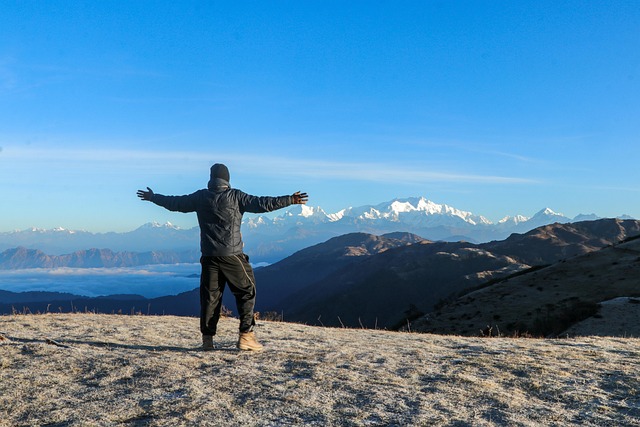
Sandakphu Trek is a very different but equally worthy alternative to Kedarkantha Trek.
Where Kedarkantha Trek is known for its summit climb, Sandakphu is known for its legendary views of the world’s tallest mountains, including Mt. Everest, Lhotse, Makalu, and Kanchenjunga — something no other Indian winter trek delivers.
The trail also spans across the India–Nepal border multiple times, which adds a cultural and geographical uniqueness that Kedarkantha Trek does not offer. The teahouse-style accommodation gives Sandakphu Trek a warm, local charm in contrast to Kedarkantha’s campsite-based experience.
The ridge walk of Sandakphu Trek is another factor that sets it apart. You walk along long stretches where both sides drop dramatically, giving you wide panoramic views throughout the trek. Kedarkantha Trek offers a summit panorama, but Sandakphu offers continuous ridge views for multiple days.
So, if you want a winter trek with international mountain views, cultural variety, and a different style of Himalayan walking, Sandakphu Trek is an exceptional alternative to Kedarkantha Trek.
5. Gulabi Kantha Trek
Gulabi Kantha Trek is a lesser-known winter summit, which makes it ideal for trekkers frustrated with the crowding at Kedarkantha Trek. Even though both treks fall under a similar difficulty range, Gulabi Kantha Trek feels far more peaceful because it remains relatively unexplored.
Kedarkantha Trek offers a beautiful summit view, but Gulabi Kantha offers something even more dramatic; a 360-degree panoramic skyline that includes Bandarpoonch, Black Peak, Shrikant, and the entire Yamunotri and Gangotri ranges. Moreover, the campsite zones are open and scenic, offering wide snow slopes rather than narrow, busy trails.
Another reason Gulabi Kantha Trek works as a great alternative is its untouched snow meadows. Kedarkantha Trek has meadows too, but they are shorter and often filled with trekkers. Gulabi Kantha’s meadows remain pristine for long stretches, letting you enjoy soft snow without footprints or noise.
Ultimately, if you want the excitement of a summit trek but without the crowd pressure and with broader panoramic views, Gulabi Kantha is an excellent swap for Kedarkantha Trek.
Why These Treks Make Best Alternatives to Kedarkantha Trek?
- Fewer crowds, more solitude. Most of these treks are less popular than Kedarkantha Trek, which means quieter trails, serene campsites and a real chance to absorb nature without interruption.
- Diverse landscapes. From snow-filled meadows to rhododendron forests to remote Himalayan ridges and lake-side camps — these treks cover a wide variety of Himalayan terrain.
- Winter-ready. All these options are viable in winter months. Snow-laden forests, frozen lakes, crisp air and brilliant mountain views make them ideal for winter trekking.
- Range of difficulty. Whether you’re a beginner looking for a gentle snow trek (Dayara Bugyal, Gulabi Kantha, Brahmatal) or a moderately experienced trekker up for snow hiking (Kuari Pass, Sandakphu), there’s something for every level.
- Real Himalayan experience. Beyond the postcard snow — the quiet nights, the forest trails, the alpine meadows and the expansive panoramas make these treks deeply immersive.
Which Trek Should You Choose? (Based on What You Want)
| What you want | Best choices among above treks |
| Easy start, gentle snow trek, minimal climbing | Dayara Bugyal, Gulabi Kantha, Brahmatal |
| Snow + alpine lake + Himalayan peak views | Brahmatal, Kuari Pass |
| Snow-covered forest walk + meadow + peaceful nights | Dayara Bugyal, Gulabi Kantha, Kuari Pass |
| Long trek with ridge-walks, panoramic Himalayan view & cultural exposure | Sandakphu |
| Snow + remote hills + quiet campsites + lesser trekkers | Kuari Pass, Sandakphu |
FAQ about Best Alternative to Kedarkantha Trek
1. Which is better Kedarkantha trek or Brahmatal trek?
2. Is Brahmatal Trek for beginners?
3. Which is the king of winter trek in India?
Its easy accessibility, thrilling summit climb, consistent snowfall, and breathtaking sunrise views from the peak make it one of the most sought-after winter treks.
4. Which trek is best in December?
Top recommendations for December include:
Brahmatal Trek – for frozen lakes and big mountain views
Dayara Bugyal Trek – for wide snow meadows
Kedarkantha Trek – for a beautiful summit climb
Kuari Pass Trek – for iconic views of Mt. Nanda Devi
Sandakphu Trek – for the world’s best view of the Sleeping Buddha range
These treks offer reliable snow, clear skies, and unforgettable winter landscapes.
Choose Best Alternative
Seeking solitude away from crowded trails doesn’t mean you must compromise on Himalayan majesty. The Himalayas are vast and these five treks — Dayara Bugyal Trek, Brahmatal Trek, Gulabi Kantha Trek, Kuari Pass Trek, and Sandakphu Trek— prove that you can enjoy snow-kissed landscapes, frosted forests, alpine meadows, remote ridges and breathtaking Himalayan panoramas, all with far fewer trekkers around.
So, if Kedarkantha Trek seems too crowded or overwhelming for you, consider one of these alternatives. Pack your bags, prep your snow gear and set out for a Himalayan winter trek that feels personal, peaceful and pure.
May your next trek bring crisp air, quiet trails, and mountain memories.
If you have anything to share or want to know more about any of these treks, do comment.