You’ve already decided to do the Chadar Trek.
Now the only question that truly matters is “What is the Chadar Trek best time?.
Get this wrong, and the trek can become unsafe or even impossible. Get it right, and you’ll experience one of the most extraordinary winter adventures on Earth.
Based on real ground conditions, not assumptions or generic advice, the timing of your Chadar Trek directly impacts ice stability, safety, and your overall experience on the frozen Zanskar River.
Thus, I’ll help you understand precisely when to go, why that window matters, and how choosing the right time ensures a safe and successful Chadar Trek, especially if this is your first time walking on a frozen Zanskar river.
- What Makes Chadar Trek So Unique?
- Chadar Trek Distance: How Long Is the Trek Really?
- Chadar Trek Best Time: When Is It Safest to Go?
- Chadar Trek Itinerary (Safety-Focused and Realistically Paced)
- Chadar Trek Difficulty Level: How Hard Is It Really?
- Why Acclimatisation Is Critical for the Chadar Trek?
- Footwear: Why Gumboots Are Used on the Chadar Trek?
- Chadar Trek Price: How Much Does It Cost?
- Major Attractions of the Chadar Trek
- FAQs about Chadar Trek Best Time
What Makes Chadar Trek So Unique?
The Chadar Trek isn’t about following a marked trail; it’s about walking on a living river.
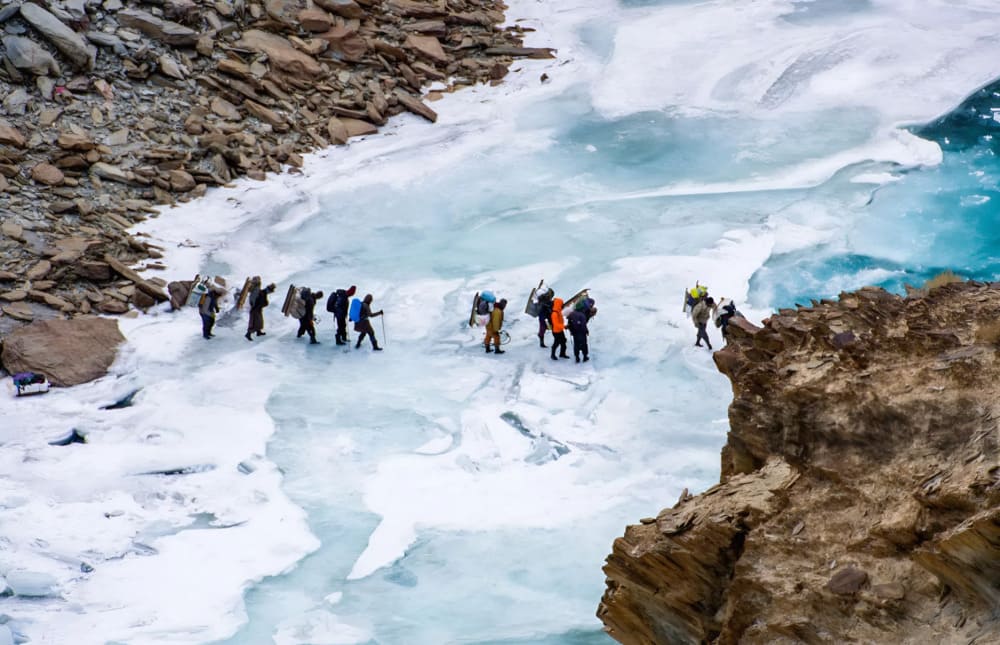
In winter, the Zanskar River freezes solid, transforming into a natural highway of ice. For centuries, this frozen river known as Chadar was the only winter lifeline for Zanskar villagers when every mountain pass disappeared under snow. Today, you walk the same route, not as a tourist, but as a winter traveller through the Himalayas.
Surrounded by sheer canyon walls rising hundreds of feet above you, every step feels surreal. Beneath your boots lies ice that shifts, cracks, and breathes with changing temperatures. Add to this temperatures plunging to –25°C to –30°C, and you begin to understand why Chadar is considered one of the coldest and most extreme treks in India.
It’s raw. It’s unforgiving. And yet, the silence, the frozen formations, and the sheer scale of the landscape make the experience deeply humbling and incredibly beautiful.
Chadar Trek Distance: How Long Is the Trek Really?
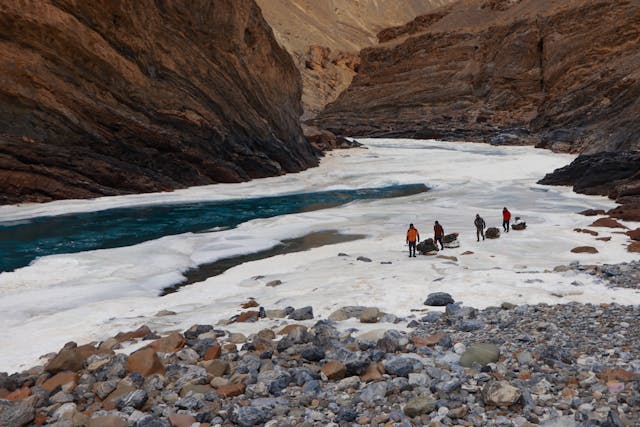
The total Chadar Trek distance is approximately 30 kilometres. While this may not sound intimidating on paper, covering this distance on a frozen river is an entirely different challenge.
Here’s what that distance actually looks like on the ground:
- Total distance: ~30 km (round trip)
- Daily walking distance: 5–6 km
- Terrain: 100% frozen Zanskar River
- Trail type: No marked trail; you walk directly on river ice
- Altitude range: Around 3,200 m to 3,600 m (11100 ft)
What makes the Chadar Trek distance demanding is not steep climbs, but surface unpredictability:
- Ice can be smooth, layered, cracked, or slightly submerged in places
- Some sections require walking on rocky riverbanks when the ice breaks
- Extreme Cold temperatures slow your pace and increase fatigue
- Constant balance on ice makes every step mentally engaging
Because walking on ice is far slower than regular trekking, even a 5–6 km day can feel long and exhausting. This is also why choosing the Chadar Trek best time is critical—during peak winter, the ice is more stable, making these distances safer and more manageable.
In short, the Chadar Trek distance is less about kilometres and more about endurance, focus, and adaptability.
Chadar Trek Duration: How Many Days Does It Take?
The Chadar Trek duration is usually 8 to 9 days, including acclimatisation days in Leh.
- 2–3 days for acclimatisation and medical checks
- 5–6 days of trekking on the frozen river
- 1 buffer day for weather or emergencies
Although the walking days are limited, the extended duration is necessary due to extreme cold, altitude, and safety requirements.
Chadar Trek Best Time: When Is It Safest to Go?
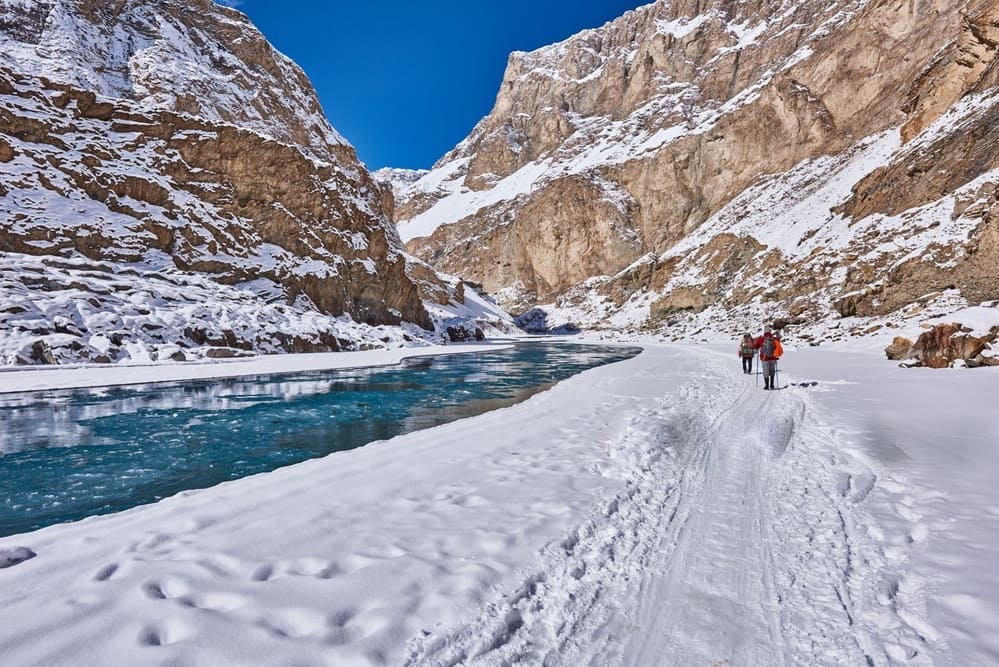
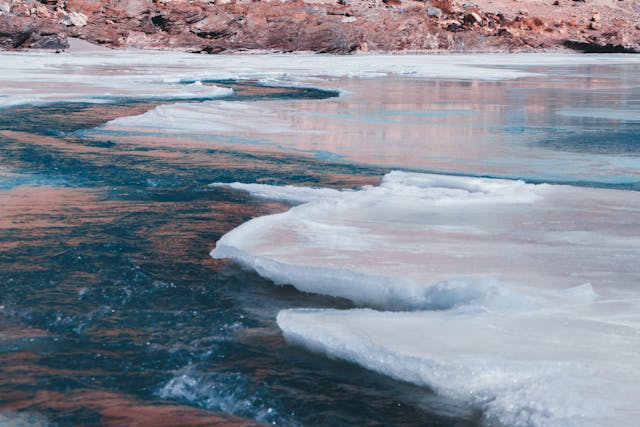
The Chadar Trek best time is from mid-January to mid-February. This is the period when the Zanskar River freezes completely, forming a thick and stable ice layer known as Chadar.
Why Mid-January to Mid-February Is Ideal?
- The river ice is fully formed and stable
- Temperatures remain consistently low, preventing ice cracks
- Weather patterns are more predictable
- Rescue and safety protocols are well established
Why Other Months Are Risky
- Early January: Ice may be thin or partially formed
- Late February: Rising temperatures can weaken the ice
For safety and a complete experience, mid-January to mid-February is the only reliable window.
Chadar Trek Itinerary (Safety-Focused and Realistically Paced)
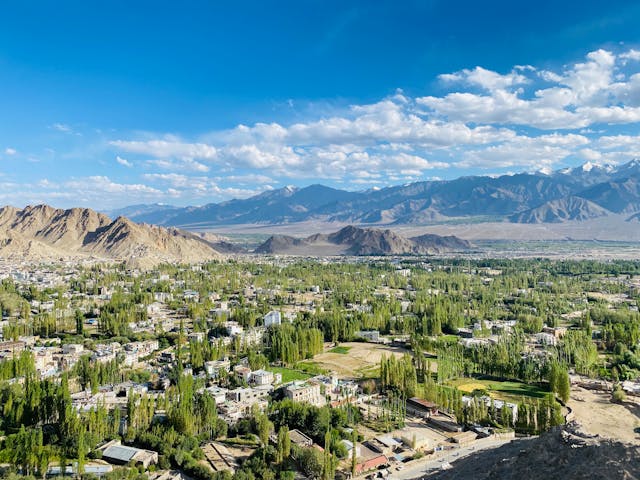
This itinerary is carefully designed to match the extreme winter conditions of Ladakh, ensure proper acclimatisation, and allow safe progress on the frozen Zanskar River. Every day has a clear purpose—either helping your body adapt to altitude or gradually building confidence on ice.
Day 1 – Arrival in Leh (3,500 m)
You arrive in Leh and transfer to your hotel, where the rest of the day is kept deliberately light.
Complete rest is advised to help your body adjust to the sudden gain in altitude. Short, slow walks around the hotel area are fine, but exertion should be avoided. In the evening, there is a detailed briefing with the trek leader covering safety protocols, weather conditions, and what to expect on the frozen river.
A thorough gear check is also conducted to ensure everything is suitable for extreme cold.
Day 2 – Acclimatisation Day in Leh
The second day is reserved entirely for acclimatisation.
You remain in Leh, allowing your body to adapt to the low oxygen levels at high altitude. Light movement is encouraged, but no strenuous activity is planned. This day plays a crucial role in reducing the risk of altitude sickness once you begin walking on the frozen river.
Proper hydration and nutrition are emphasised throughout the day.
Day 3 – Mandatory Medical Check-up
Before moving toward the trek route, a mandatory medical examination is conducted.
Oxygen saturation, pulse rate, and blood pressure are carefully monitored. Only trekkers who meet the required medical standards are cleared to proceed.
This screening is essential for the Chadar Trek due to extreme cold, prolonged exposure, and limited evacuation options once on the river.
Day 4 – Leh to Tilado | Trek to Shingra Yokma
You drive from Leh to Tilado, the starting point of the Chadar Trek. From here, you step onto the frozen Zanskar River for the first time.
The initial walking distance is intentionally kept short to help you adapt to ice walking. You learn how to maintain balance, adjust your pace, and move confidently on frozen surfaces.
Your day ends with an overnight camp at Shingra Yokma, marking your first night beside the frozen river.
Day 5 – Shingra Yokma to Shingra Goma
As you continue deeper into the Zanskar Gorge, the landscape begins to feel more remote and dramatic.
The canyon walls rise steeply on both sides, and the river narrows in places. Ice formations become more visible, and you encounter a variety of ice textures underfoot.
By the time you reach Shingra Goma, your body and mind are more comfortable with the rhythm of walking on ice.
Day 6 – Shingra Goma to Tsomo Paldar
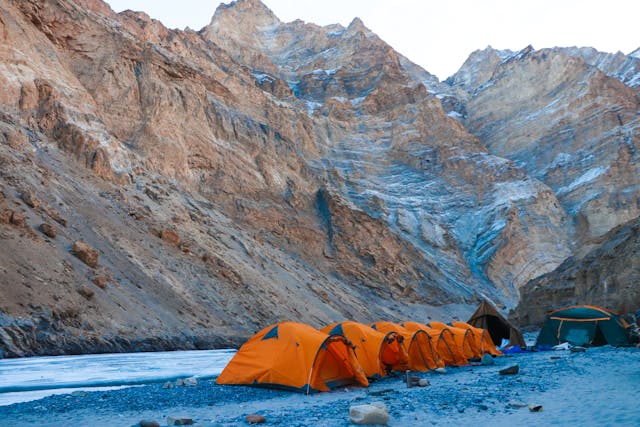
This day takes you through some of the most visually striking sections of the trek.
The canyon opens and closes at intervals, revealing vast frozen stretches and layered ice formations shaped by flowing water and freezing temperatures. The trek to Tsomo Paldar is steady and immersive, offering you long hours of uninterrupted walking on the frozen river. This campsite is often remembered for its dramatic surroundings and deep winter silence.
Day 7 – Return Journey Begins
You begin retracing the same route back toward the starting point.
Although the terrain remains the same, walking feels easier due to familiarity with the ice conditions and improved confidence. Your pace naturally becomes more efficient, but careful foot placement is still essential.
The return journey offers a chance to observe the river and canyon from a new perspective.
Day 8 – Drive Back to Leh
On the final day, you complete the last stretch of walking on the frozen river and reach the road head near Tilado.
From here, you drive back to Leh, marking the official end of the Chadar Trek. The rest of the day is spent recovering, reflecting on the experience, and adjusting back to comfort after days in extreme winter conditions.
Chadar Trek Difficulty Level: How Hard Is It Really?
The Chadar Trek difficulty level is best described as difficult to extremely difficult, not because of steep climbs or technical mountaineering, but due to the unique and unforgiving conditions you face every single day. If you’re expecting a conventional Himalayan trek, Chadar will challenge that assumption quickly.
To begin with, extreme cold is the biggest test. Temperatures regularly drop to –25°C to –30°C, especially at night. In these conditions, even simple tasks like adjusting gloves or opening a water bottle require effort and patience. At the same time, you spend long hours walking continuously on ice, which demands constant balance, careful foot placement, and mental focus.
Moreover, the entire trek takes place at a high altitude—above 3,000 meters throughout. The combination of altitude and cold slows your pace, increases fatigue, and makes recovery harder than on regular treks. Adding to this challenge is the remote nature of the route. Once you are deep inside the Zanskar Gorge, evacuation options are limited, which means you must rely heavily on preparation, discipline, and decision-making.
Because of all these factors, the Chadar Trek is as much a mental challenge as it is a physical one. You need the ability to stay calm in harsh conditions, follow safety instructions strictly, and keep moving even when comfort is minimal.
Who Should Attempt the Chadar Trek?
Given the demanding nature of the trek, it is best suited for:
- Trekkers with prior Himalayan trekking experience, preferably in winter conditions
- Individuals with good cardiovascular fitness and stamina
- Those who can tolerate prolonged exposure to extreme cold and remain mentally resilient
For these reasons, the Chadar Trek is not recommended for beginners or first-time trekkers.
If you meet the above criteria and prepare well, however, Chadar can become one of the most rewarding and transformative trekking experiences of your life.
Why Acclimatisation Is Critical for the Chadar Trek?
At the altitude and temperatures where the Chadar Trek takes place, acclimatisation is not a formality; it’s a safety requirement.
You are operating above 3,000 meters (1100 ft) in extreme cold, where the body consumes more energy and oxygen just to stay warm. Without adequate acclimatisation, even strong and fit trekkers can struggle.
I’ve seen trekkers feel fine on Day 1 on trek and then develop symptoms of AMS once they climb higher. The same thing happens on this trek. Headaches that don’t go away, sudden fatigue, and loss of appetite are early warning signs that the body hasn’t adapted yet.
If ignored, these symptoms can quickly escalate into Acute Mountain Sickness (AMS).
Without proper acclimatisation, trekkers risk:
- Acute Mountain Sickness (AMS), which can worsen rapidly in cold conditions
- Severe fatigue, making balance on ice harder and increasing the risk of slips
- Persistent headaches and nausea, affecting focus and coordination
- Forced evacuation, which is complicated due to the remote river route
This is precisely why the Chadar Trek duration includes multiple acclimatisation days in Leh, and a medical check-up, even though it extends the overall trip. Those extra days significantly improve safety, stamina, and overall trek success.
Footwear: Why Gumboots Are Used on the Chadar Trek?
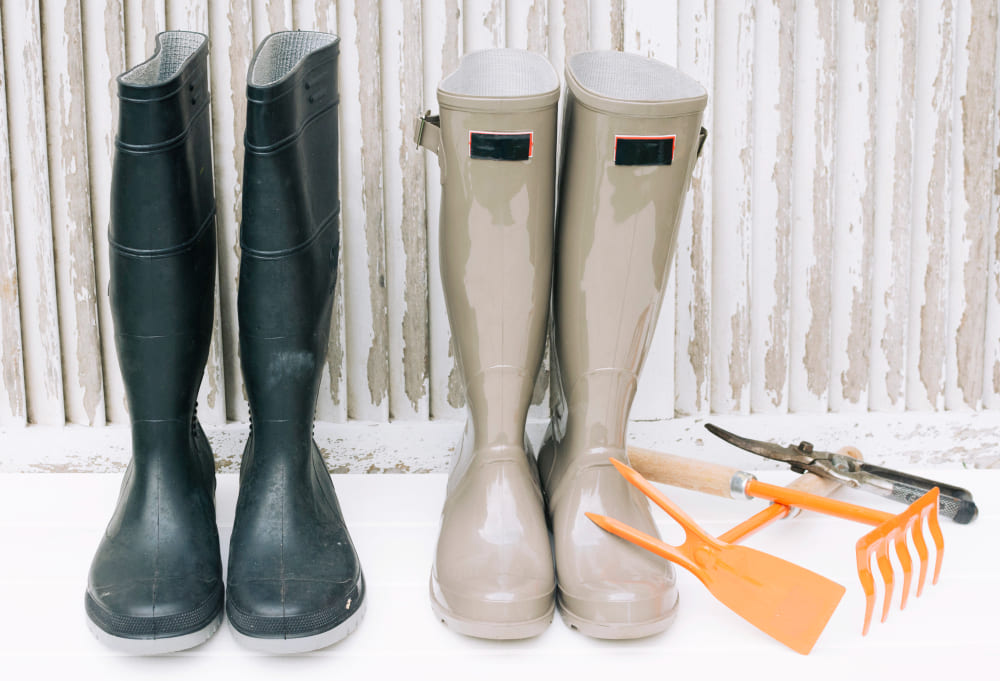
If you’re expecting to use microspikes or regular trekking shoes on the Chadar Trek, this is where the trek surprises most people.
Microspikes are not used here. Instead, long gumboots are mandatory, and there’s a very practical reason for that.
The frozen Zanskar River is not uniformly dry ice. As the sun hits the river during the day, certain sections develop a thin layer of water on top of the ice. In these moments, standard trekking shoes—even with spikes—quickly become soaked, leading to numb feet and a high risk of frostbite.
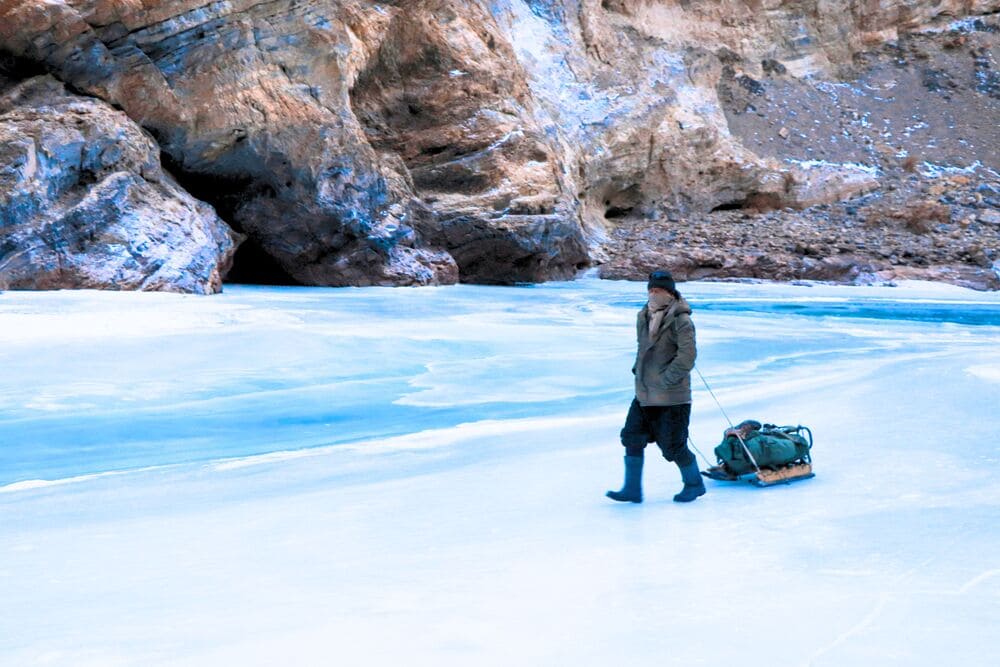
Gumboots are essential because they:
- Insulate your feet from icy water, keeping them dry and warm
- Protect your feet when the ice melts slightly during daylight hours
- Provide a better grip on flat frozen surfaces, especially when the ice is smooth
Most certified trekking operators provide high-quality, knee-length gumboots, and using them is non-negotiable for safety. Once you start walking on the river, you’ll quickly realise that staying dry is just as important as staying warm.
Chadar Trek Price: How Much Does It Cost?
The Chadar Trek price typically ranges between ₹27,000 and ₹30,000 per person.
Usually Included
- Accommodation in Leh and camps
- Meals during the trek
- Certified trek leaders and guides
- Medical support and oxygen
- Permits and safety equipment
- Gumboots
- Transportation
Usually Excluded
- Flights to and from Leh
- Personal expenses
- Travel insurance
Note: Prices may vary based on the operator.
Major Attractions of the Chadar Trek
- Walking on the frozen Zanskar River
- Towering canyon walls
- Natural ice formations
- Remote Himalayan wilderness
- Raw winter survival experience
This trek is less about scenic variety and more about endurance and exclusivity.
FAQs about Chadar Trek Best Time
1. Which month is best for the Chadar Trek?
The best month for the Chadar Trek is January, especially from mid-January to mid-February. During this period, the Zanskar River freezes completely, forming a stable ice sheet that is safest for trekking. Early January can be risky due to partially frozen sections, while late February may see melting ice as temperatures rise.
2. Is Chadar Trek difficult?
Yes, the Chadar Trek is considered difficult to extremely difficult. The challenge does not come from steep climbs but from extreme cold (up to –30°C), walking continuously on ice, high altitude, and harsh weather conditions. It requires good physical fitness, strong mental endurance, and prior high-altitude trekking experience.
3. How much does the Chadar Trek cost per person?
The cost of the Chadar Trek usually ranges between ₹27,000 and ₹30,000 per person, depending on the trekking organisation, inclusions, and season. This typically covers accommodation, meals during the trek, permits, safety equipment, guides, medical support, and gumboots. Flights to Leh and personal expenses are usually not included.
4. How many days is the Chadar Trek?
The Chadar Trek generally takes 8 to 9 days, including acclimatisation days in Leh. The actual trekking on the frozen river lasts around 5 to 6 days, while the remaining days are reserved for rest, medical checks, and travel to and from the trek starting point.
5. What are the risks of the Chadar Trek?
The Chadar Trek involves several risks due to its extreme nature, including:
- Extreme cold and frostbite
- Altitude sickness (AMS)
- Unstable or cracking ice
- Slips while walking on the frozen river
- Sudden weather changes
- Limited evacuation options due to remoteness
Proper acclimatisation, choosing the right trekking window, and going with an experienced trek operator significantly reduce these risks.
Why Timing Is Everything
The Chadar Trek is not about speed or comfort; it’s about choosing the right time, respecting nature, and preparing thoroughly.
When planned during the Chadar Trek best time, with proper acclimatisation and the right gear, it becomes one of the most unforgettable adventures in the Himalayas.