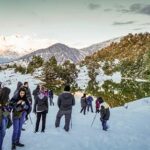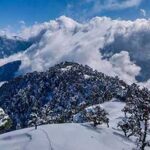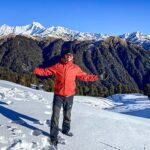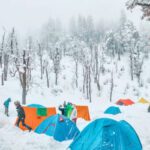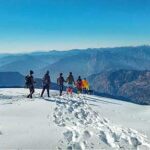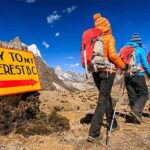
If you’re planning a trek in February, you’re likely thinking about two things: snow and weather conditions. And that makes sense.
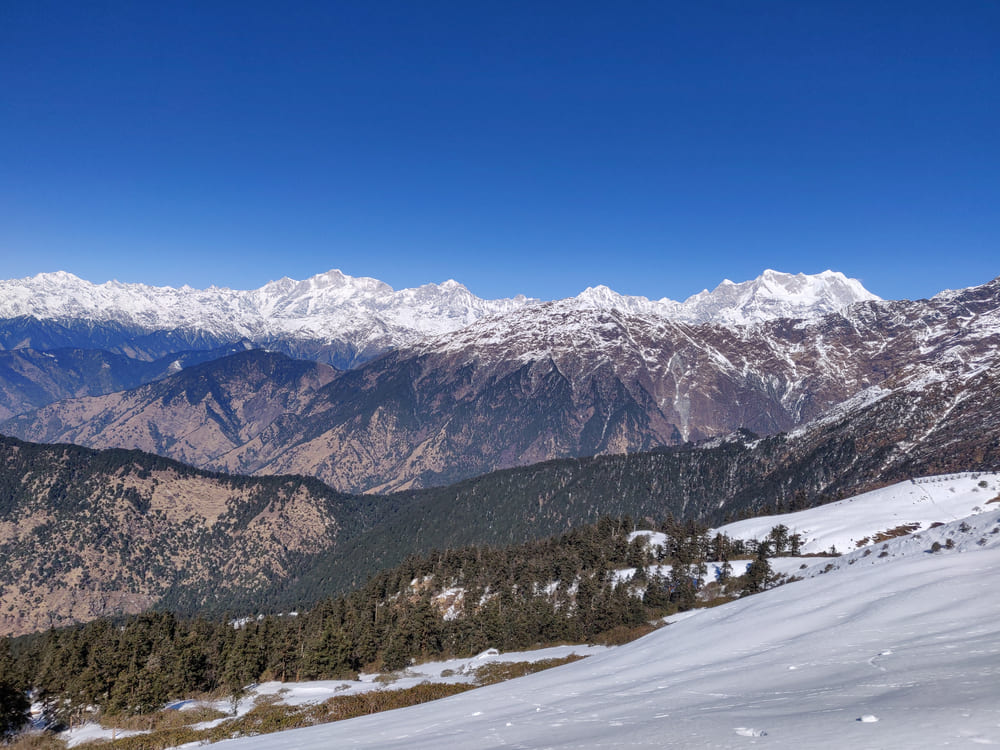
February is when winter still dominates the higher Himalayas, while some trails begin to feel more stable and predictable. Snow remains deep on popular winter routes, ridges stay dramatic, and the mountains continue to feel raw and quiet.
But choosing the right trek matters.
Pick a trail that’s too demanding, and winter can feel exhausting.
Pick one that’s too easy, and you might miss the full experience February has to offer.
That’s why I’ve listed the best treks in February, covering reliable winter classics as well as routes better suited for steady conditions and longer walking days.
So whether you’re stepping into winter trekking for the first time or looking for a challenge that pushes your limits, this list will help you decide where to go and why.
Key Takeaways: Trekking in February
- February offers a balanced winter trekking window, with reliable snow at higher altitudes and more stable conditions compared to peak winter months.
- Beginner-friendly treks like Nag Tibba and Dayara Bugyal remain ideal for first-time winter trekkers, thanks to gradual trails and manageable itineraries.
- Treks such as Kedarkantha and Brahmatal provide a deeper winter experience, combining sustained snow, longer durations, and rewarding summit or ridge walks.
- Crowd levels generally reduce after January, making February a better month for quieter campsites and a more immersive trail experience.
- Choosing the right trek based on fitness, experience, and comfort with cold conditions is key to enjoying winter trekking in February.
- Key Takeaways: Trekking in February
- 1. Nag Tibba Trek, Uttarakhand
- 2. Dayara Bugyal Trek, Uttarakhand
- 3. Kedarkantha Trek, Uttarakhand
- 4. Gulabi Kantha Trek, Uttarakhand
- 5. Brahmatal Trek, Uttarakhand
- 6. Sandakphu Trek, West Bengal
- 7. Chopta Chandrashila Trek (via Deoria Tal), Uttarakhand
- 8. Kuari Pass Trek, Uttarakhand
- Lesser-Known Treks in February (For Quiet Seekers)
- FAQs About Best Treks in February
1. Nag Tibba Trek, Uttarakhand
Difficulty: Easy
Best for: Beginners, Families, Weekend Trekkers
Duration: 2 Days
Max Altitude: 9,900 ft
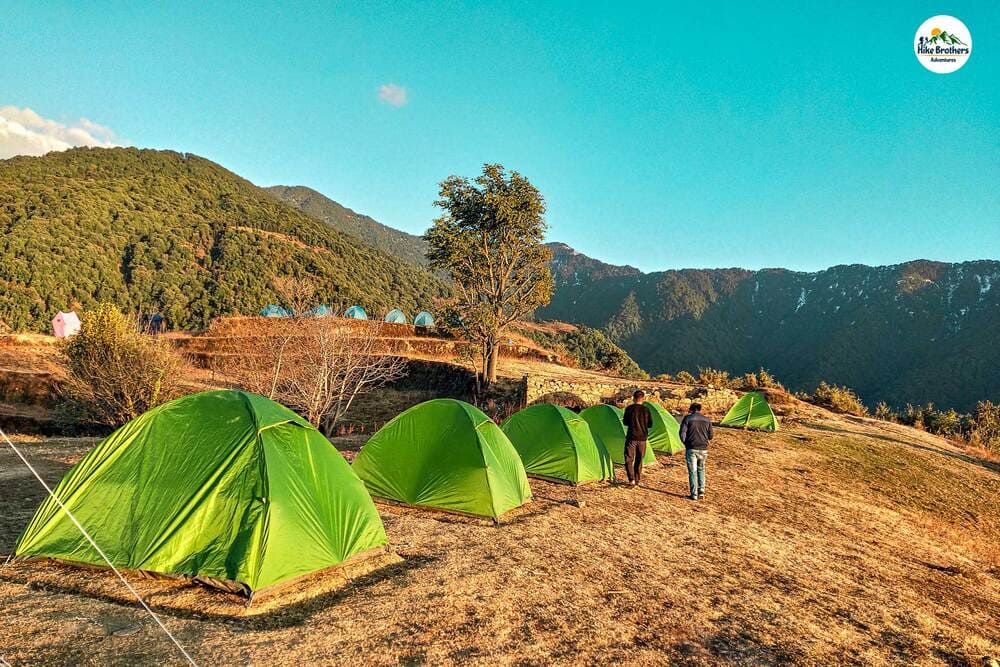
I’ve trekked to Nag Tibba several times across different seasons, and I can say with confidence that it remains one of the best winter treks in February for beginners and families. So, whenever someone asks me which trek they should choose for their first proper snow experience, Nag Tibba is almost always my first recommendation.
Often called the “Sergeant’s Peak,” Nag Tibba stands out because of how accessible and well-balanced the trail is. What I really like about doing this trek in February is how dependable the conditions feel. Winter is still firmly in place at this altitude, so you don’t have to worry about missing snow. At the same time, the terrain never feels extreme. The ascent is gradual, the trail is clearly marked, and the overall experience feels complete without being overwhelming.
By February, Nag Tibba feels settled and predictable in the best way. The oak and rhododendron forests remain buried under snow, and in many cases, you start walking on snow fairly early in the trek. Campsites sit under thick snow sheets, which adds to the winter atmosphere, and the summit climb gives you that exciting sense of achievement without pushing you into technical or risky terrain.
What continues to surprise me is the view from the summit. For a short, weekend trek, Nag Tibba delivers far more than expected. On a clear February morning, I’ve seen peaks like Bandarpoonch, Swargarohini, Kala Nag, and parts of the Gangotri range standing out sharply against the winter sky. That combination of ease, snow, and rewarding views is exactly why Nag Tibba works so well for a first winter trek.
Why Nag Tibba Stands Out in February?
- Consistent and reliable snow cover well into February
- Safe altitude profile with minimal risk of AMS
- Balanced trail experience with forest walks, snow-covered paths, and a clear summit climb
- Short 2-day itinerary that fits easily into weekend plans
- Ideal for beginners, families, and first-time winter trekkers, including kids (above a suitable age)
Nag Tibba Trek – Short February Itinerary
Day 1: Drive from Dehradun to Pantwari and Trek to Nag Tibba Base Camp
Your journey on the first day starts with a scenic drive to Pantwari via Mussorrie, followed by a gradual ascent through oak and rhododendron forests. On the trail, snow is usually present and becomes deeper as you approach the campsite. You spend a night at the base camp amid snow-covered surroundings.
Day 2: Trek from Base Camp to Nag Tibba Summit and Return. Drive from Pantwari to Dehradun
Next morning, you go for a summit climb over snow-covered trails with clear Himalayan views. After spending time at the top, you descend to Pantwari and drive back to Dehradun.
2. Dayara Bugyal Trek, Uttarakhand
Difficulty: Easy to Moderate
Best for: Beginners, Meadow Lovers
Duration: 4–5 Days
Max Altitude: ~12,100 ft
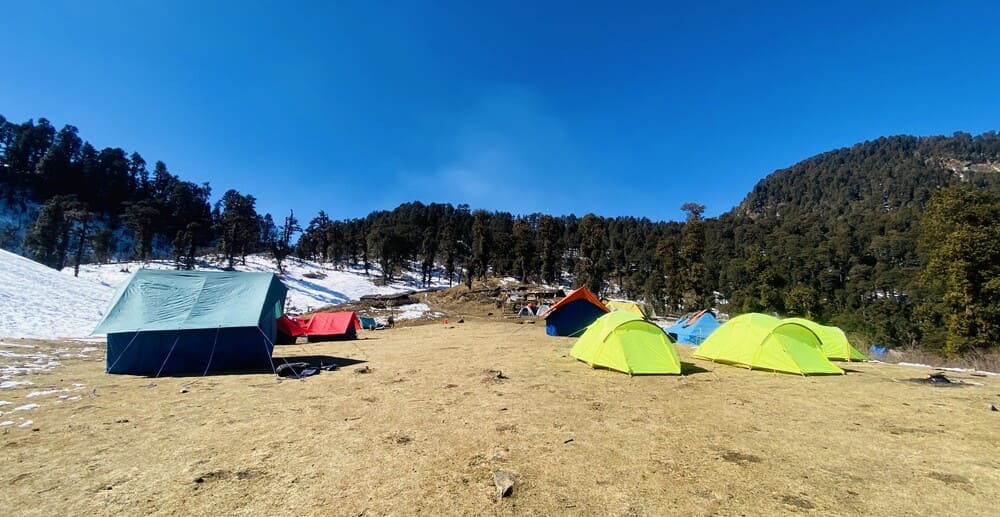
I’ve always felt that Dayara Bugyal is one of the easiest and most rewarding ways to experience winter trekking, especially in February. It’s the kind of trek I often recommend to people who want to walk on snow without dealing with steep climbs or technical challenges. The wide alpine Dayara meadows are the highlight here, and by February, they remain completely covered in snow, creating an open, expansive winter landscape.
When I trekked here in the peak winter of 2025, the Dayara meadows were buried under a thick blanket of snow. What’s usually green and rolling turns into long, white stretches that feel calm and uninterrupted. Walking across these meadows felt steady and unhurried. The trail does gain altitude, but the climbs are gentle, which means you’re not constantly catching your breath or watching every step. Instead, you settle into a rhythm and simply take in the surroundings.
What I really appreciate about Dayara Bugyal is how forgiving the trail is. There are no exposed sections and no sharp summit pushes that add pressure. You move through forests, clearings, and open meadows at a consistent pace, which makes it a great place to learn winter trekking basics—how to walk on snow, manage cold conditions, and get comfortable with camping in winter terrain.
The campsites are another reason this trek stands out for me. In February, they’re set in open spaces with clear views of snow-clad peaks all around. Mornings are cold and quiet, with soft light hitting the mountains, while evenings feel still and peaceful rather than harsh. It’s immersive, but never overwhelming.
Dayara Bugyal isn’t about chasing a summit. For me, it’s about being in the landscape—walking across snow-covered meadows, camping in wide-open spaces, and letting winter slow you down. That’s what makes it one of the most satisfying February treks for anyone looking for a relaxed, scenic winter experience.
Why Dayara Bugyal Stands Out in February?
- Vast snow-covered meadows that feel wide, open, and undisturbed
- Gentle trail gradients that allow steady walking on snow without constant physical strain
- One of the best treks to learn winter camping, snow walking, and cold-weather routines
- Open campsites offering panoramic views of the surrounding snow-clad peaks
- Ideal for trekkers seeking a slow, scenic winter experience rather than a demanding summit push
Dayara Bugyal Trek – Short February Itinerary
Day 1: Drive to Raithal
Scenic mountain drive as winter conditions become more pronounced. Cold temperatures and snow-covered surroundings set the tone for the trek.
Day 2: Trek from Raithal to Gui Campsite
Gradual ascent through forest sections with increasing snow cover. Overnight camping at Gui.
Day 3: Trek from Gui to Chilapada
Walk through forest clearings and open stretches. Snow depth increases as the trail approaches Chilapada.
Day 4: Trek from Chilapada to Dayara Top and Return to Gui
Early start. Long walk across vast snow-covered meadows to Dayara Top, followed by a descent back to Gui.
Day 5: Trek from Gui to Raithal and Return Journey
Final descent through forest trails and drive back.
3. Kedarkantha Trek, Uttarakhand
Difficulty: Easy to Moderate
Best for: Beginners, First-time Summit Trekkers
Duration: 4–5 Days
Max Altitude: ~12,500 ft
Kedarkantha has long been considered one of the treks that truly defines winter trekking in India, and February remains a fantastic time to experience it. Snow remains consistent throughout the trail, conditions are generally stable, and the trek offers a complete introduction to what winter summit climbing really feels like.
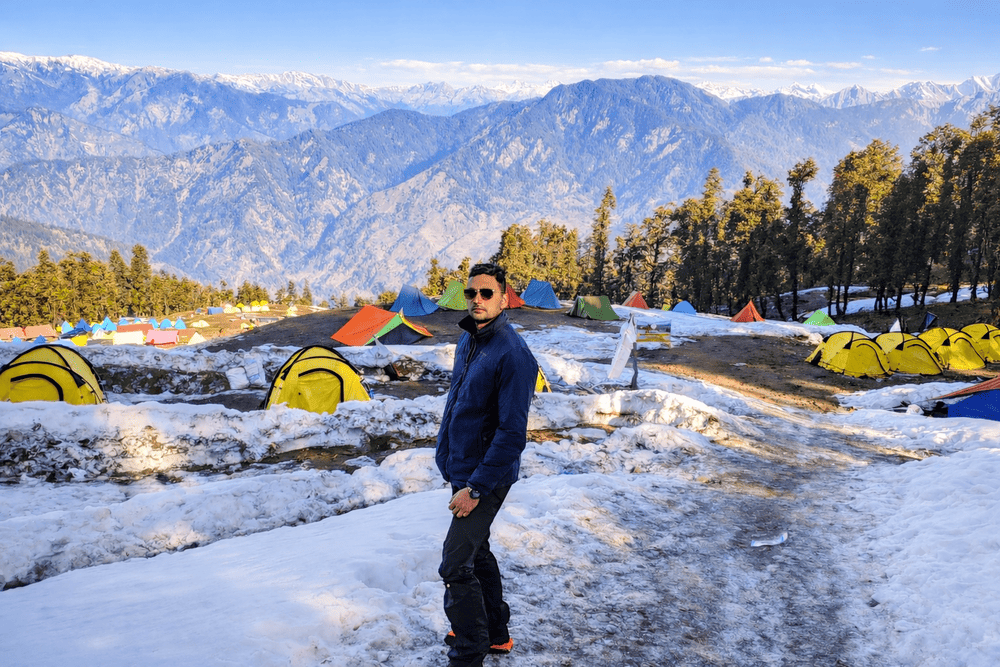
One thing I especially appreciate about trekking to Kedarkantha in February is how calm the trail feels. Once the holiday rush of late December and early January passes, the route opens up. Campsites feel less crowded, forest sections are quieter, and the entire experience becomes more immersive. That slower pace makes it easier to settle into winter routines and adapt to the cold.
What works really well on this trek is how the trail builds your confidence day by day. The initial days take you through dense pine forests, where snow gradually starts appearing and thickens as you gain altitude. By the time you reach Juda Ka Talab in winter, the landscape feels completely transformed. In February, the lake is often frozen, surrounded by snow-laden trees, and the campsite has a distinctly alpine feel.
From Juda Ka Talab onward, snow becomes continuous. The campsites feel remote but still comfortable, giving you time to get used to walking on snow and managing cold conditions before summit day. This steady progression is exactly why I often suggest Kedarkantha to trekkers attempting their first winter summit.
Summit day is where Kedarkantha really leaves an impression. The climb starts early, usually in complete darkness, with headlamps lighting up a narrow line of footprints on snow.
As the sun begins to rise, the summit opens up to wide Himalayan views. On a clear February morning, peaks like Swargarohini, Bandarpoonch, Black Peak, and Ranglana stand out sharply, making the climb feel challenging, focused, and deeply rewarding.
Why Kedarkantha Stands Out in February?
- Reliable and continuous snow from campsites to the summit
- Reduced crowd levels compared to peak holiday periods
- Gradual trail design that prepares trekkers well for summit day
- Juda Ka Talab campsite remains snow-covered, often with a frozen lake
- One of the most beginner-friendly winter summit treks in India
- Clear sunrise views from the summit on stable February mornings
Kedarkantha Trek – Short February Itinerary
Day 1: Drive from Dehradun to Sankri
Scenic mountain drive as winter conditions become more noticeable. Overnight stay at Sankri.
Day 2: Trek from Sankri to Juda Ka Talab
Gradual ascent through pine forests with increasing snow cover. Camp near Juda Ka Talab.
Day 3: Trek from Juda Ka Talab to Kedarkantha Base Camp
Continuous snow trails through forest sections. Overnight stay at base camp.
Day 4: Trek from Base Camp to Kedarkantha Summit and Descend to Hargon Camp
Early morning summit climb over snow-covered trails, followed by descent.
Day 5: Hargaon camp to Sankri
Trek down to Sankri.
Day 6: Return to Dehradun
4. Gulabi Kantha Trek, Uttarakhand
Difficulty: Easy to Moderate
Best for: Beginners, Meadow Lovers, Quiet Winter Treks
Duration: 4–5 Days
Max Altitude: ~12,500 ft
Gulabi Kantha is one of those treks I often suggest when someone wants a quieter winter experience without stepping into anything extreme. I’ve found February to be a particularly good time to do this trek, especially if you enjoy snow-covered trails but prefer staying away from crowded, mainstream routes.
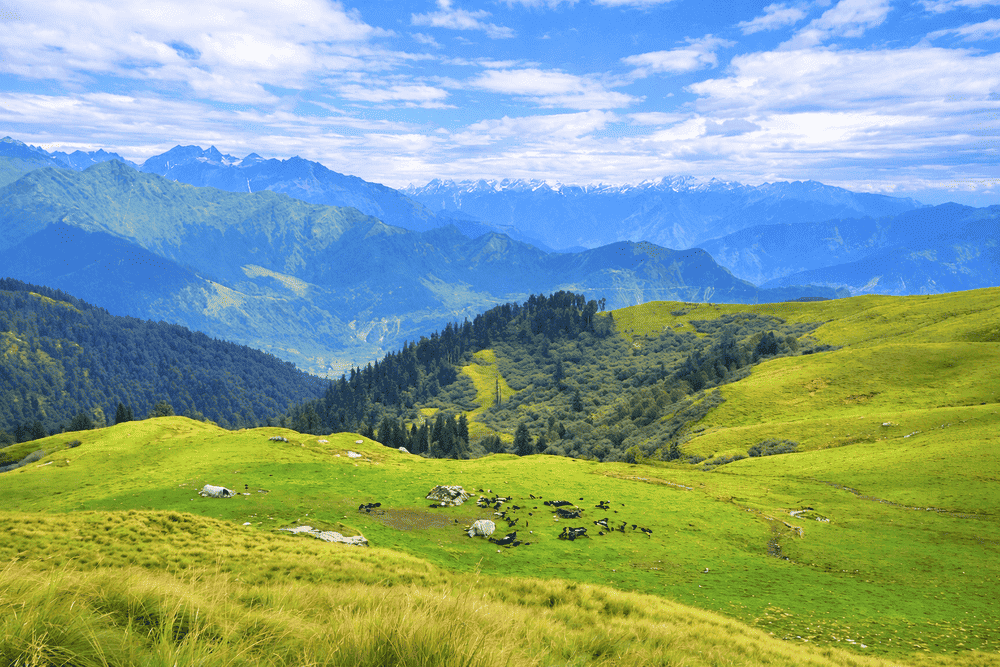
What I like about Gulabi Kantha is how gentle and welcoming the trail feels. The ascent is gradual, and the route takes you through forests and open clearings that slowly transition into snow-laden landscapes. By February, snow is usually well established at higher sections of the trek, giving you a proper winter feel without demanding constant physical effort.
As you gain altitude, the environment opens up beautifully. The Gulabi Kantha meadows are wide and peaceful, and walking across them in winter feels slow and unhurried. I’ve always felt that this trek allows you to settle into the rhythm of winter trekking—steady walking, quiet surroundings, and plenty of time to observe the landscape rather than rush through it.
The campsites are another reason this trek stands out for me. In February, they’re often set in open spaces with snow all around, and the evenings feel calm rather than harsh. Mornings tend to be cold and still, with soft light gradually revealing the surrounding peaks. It’s the kind of setting that makes winter feel immersive without being overwhelming.
Gulabi Kantha isn’t about pushing limits or chasing a summit rush. For me, it’s about enjoying snow-covered trails, quiet campsites, and a sense of isolation that’s hard to find on more popular winter treks. That’s exactly why it works so well in February for trekkers who want a scenic, less-crowded winter experience that still feels complete.
Why Gulabi Kantha Stands Out in February?
- Consistent snow cover across forest trails and alpine meadows
- Quieter routes compared to popular winter treks, offering a peaceful experience
- Gentle trail gradients suitable for beginners with basic fitness
- Open campsites with wide views of surrounding Himalayan peaks
- Ideal for trekkers seeking snow, views, and solitude rather than crowded summit pushes
5. Brahmatal Trek, Uttarakhand
Difficulty: Moderate
Best for: Experienced Beginners, Winter Trek Enthusiasts
Duration: 5–6 Days
Max Altitude: ~12,250 ft
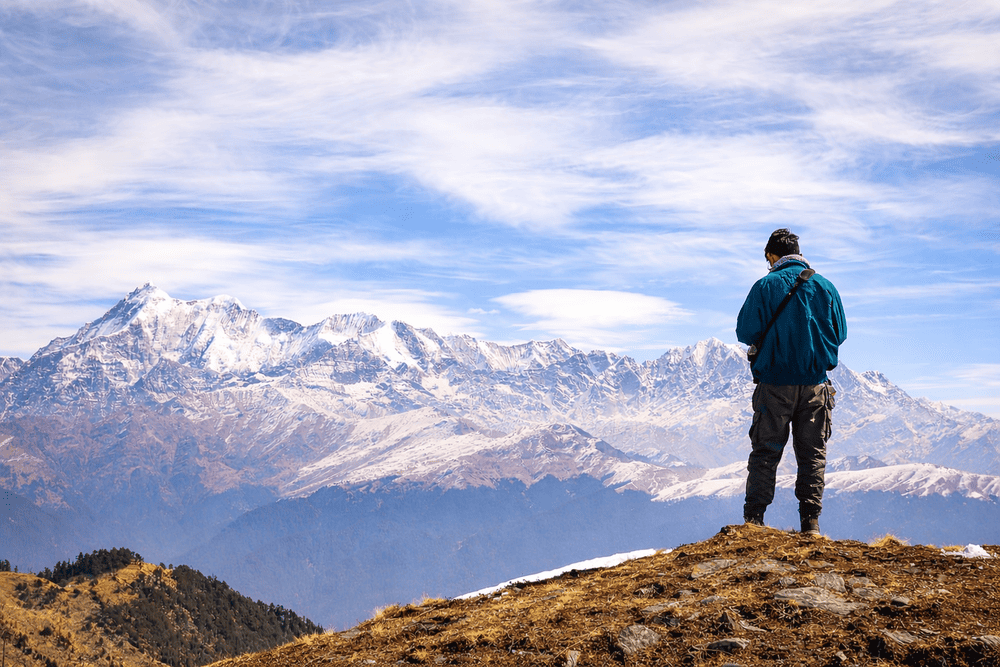
Brahmatal has always felt like a natural step up for me after the shorter winter treks, and February is one of the best months to experience it. By this point in the season, snow coverage is consistent, and the trail feels well-settled, which makes the overall experience far more reliable.
If someone is looking for a longer winter trek that goes beyond the beginner level, this is often one of the first routes I think of.
What really stands out on the Brahmatal trek is the amount of time you spend walking on snow. From the early stages, snow starts appearing and gradually becomes continuous as you gain altitude. The forest sections feel quiet and remote, while the open ridge walks expose you to wide Himalayan views. Unlike shorter winter treks, Brahmatal gives you several days to adjust to winter conditions, which I’ve found makes the experience more immersive and less rushed.
One of the highlights for me is Brahmatal Lake. In February, the lake is usually frozen, surrounded by snow-covered slopes that give the area a distinctly alpine feel. The campsites along the route are often set either in open snowfields or tucked into forest clearings, creating a nice balance between exposed views and sheltered rest points.
Summit day on Brahmatal feels more like a sustained effort than a sharp push. The climb demands endurance, especially in snow, but it avoids technical sections. That’s why I usually recommend it to trekkers who have some prior experience or are physically well-prepared. On clear February days, the views open up to Mt. Trishul, Mt. Nanda Ghunti, and several surrounding Himalayan ranges, visible for long stretches along the trail.
Because of its longer duration, steady difficulty, and reliable snow conditions, Brahmatal works really well for trekkers who want to move beyond entry-level winter treks and spend more time truly experiencing a Himalayan winter.
Why Brahmatal Stands Out in February?
- Consistent snow coverage across forests, ridges, and campsites
- Longer winter itinerary that allows gradual adaptation to snow trekking
- Frozen Brahmatal Lake adds a distinct alpine highlight
- Extended ridge walks with uninterrupted Himalayan views
- Moderate difficulty without technical climbing sections
- Ideal for trekkers transitioning from beginner to intermediate winter treks
Brahmatal Trek – Short February Itinerary
Day 1: Drive from Rishikesh to Lohajung
Long mountain drive as winter conditions become noticeable.
Day 2: Trek from Lohajung to Bekaltal
Gradual ascent through forests with increasing snow. Bekaltal often appears partially or fully frozen. Overnight camp.
Day 3: Trek from Bekaltal to Brahmatal Campsite
Snow-covered trail leading to open alpine terrain near Brahmatal. Views begin to open up.
Day 4: Trek from Brahmatal Campsite to Brahmatal Top and Return
Steady climb to the top with wide Himalayan views, followed by a return to the campsite.
Day 5: Trek back to Lohajung
Descent through forest sections.
Day 6: Drive from Lohajung to Rishikesh
6. Sandakphu Trek, West Bengal
Difficulty: Moderate
Best for: Beginners with good fitness, First-time Himalayan Panorama Seekers
Duration: 6–7 Days
Max Altitude: ~11,930 ft
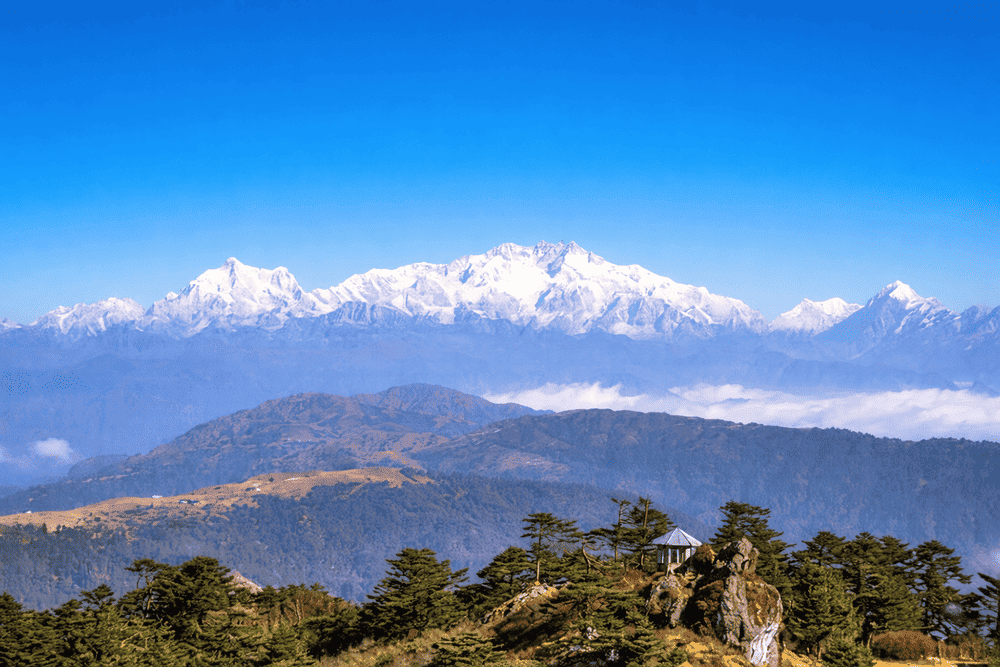
Sandakphu offers a very different kind of winter trekking experience compared to the snow-heavy Himalayan routes in Uttarakhand, and that’s exactly why I enjoy it in February. Instead of deep, continuous snow, the trek combines cold mountain conditions, long walking days, and expansive views that unfold gradually as you move along the trail.
What works well for Sandakphu in February is the nature of the terrain. The trail is gradual and well-established, which makes the walking feel steady rather than demanding. Snow does appear at higher sections, especially around Sandakphu and Phalut, but it’s usually lighter and more manageable. I’ve found this makes the trek accessible even to beginners, as long as they’re comfortable with longer walking hours and consistent ascents.
The trek builds up at a natural pace. Early sections take you through forests, villages, and open ridgelines, giving your body time to adjust. As you gain altitude, the air becomes colder, and the landscape opens up. February often brings clear skies here, and that clarity plays a huge role in shaping the overall experience.
For me, the biggest highlight of Sandakphu is the mountain panorama. From key viewpoints, you can see four of the world’s highest peaks—Everest, Kangchenjunga, Lhotse, and Makalu—standing along the horizon. In winter, these peaks appear especially sharp against clear skies, creating views that feel almost unreal for a non-technical trek.
Sandakphu isn’t about rushing toward a summit. It’s about sustained walking and being immersed in the landscape for several days. That expansive, unhurried experience is what makes it such a strong February option for trekkers who want a longer winter journey without the challenges of technical snow climbing.
Why Sandakphu Stands Out in February?
- Clear winter skies offering sharp views of Everest, Kangchenjunga, Lhotse, and Makalu
- Gradual trail profile suitable for beginners, comfortable with longer walking days
- Lighter snow conditions compared to higher Himalayan winter treks
- A mix of forests, ridges, and open viewpoints rather than technical snow terrain
- One of the best winter treks for Himalayan panoramas without summit pressure
Sandakphu Trek – Short February Itinerary
Day 1: Drive from NJP / Bagdogra to Sepi or Rimbeek
Long mountain drive through forested roads. Cold conditions begin to set in.
Day 2: Trek from Sepi / Rimbeek to Gurdum
Gradual ascent through forests and villages. Trail remains well-defined.
Day 3: Trek from Gurdum to Sandakphu
Steady climb with changing terrain. Possibility of snow near the top, depending on conditions.
Day 4: Trek from Sandakphu to Phalut
High-altitude ridge walk with continuous Himalayan views. Cold and exposed sections.
Day 5: Trek from Phalut to Gorkhey
Long descent through open ridges and forests.
Day 6: Trek from Gorkhey to Rammam and Drive Back
Final descent followed by the return journey.
7. Chopta Chandrashila Trek (via Deoria Tal), Uttarakhand
Difficulty: Easy to Moderate
Best for: Beginners, First-Time Summit Trekkers, Short Winter Treks
Duration: 4–5 Days
Max Altitude: ~13,100 ft
Chopta Chandrashila is one of the most rewarding short winter treks you can do in February. I often recommend it to trekkers who want a real summit experience without committing to a long itinerary. The route combines accessible trails, reliable winter snow at higher sections, and some of the finest summit views in the Garhwal Himalayas.
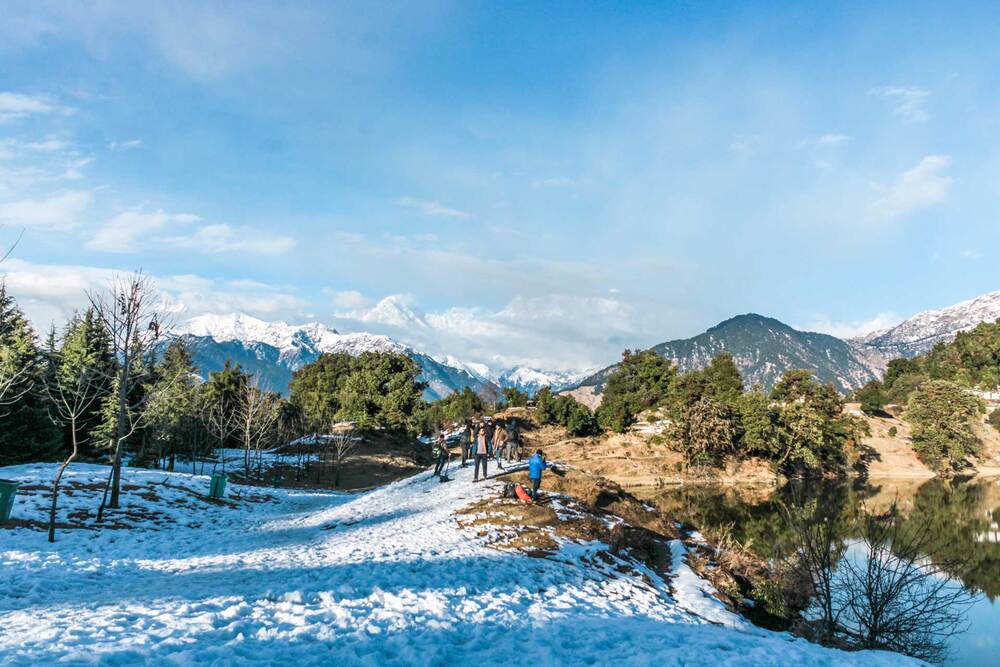
What makes this version of the trek even more special is the inclusion of Deoria Tal, a beautiful high-altitude lake located above the village of Sari. The short trek to the lake passes through forest trails and gradually opens up to a peaceful alpine basin. On clear mornings, the still waters of Deoria Tal reflect the towering Chaukhamba peaks, creating one of the most memorable Himalayan views you can witness early in a trek.
From Deoria Tal, the trail continues through dense forests and quiet mountain paths toward Baniya Kund, a scenic meadow near Chopta. This section of the trek feels peaceful and less crowded, allowing trekkers to experience the forested side of the Garhwal Himalayas before reaching the main trail.
The journey eventually leads to Tungnath, the highest Shiva temple in the world. By February, snow usually blankets the upper sections of the trail, transforming the stone pathway into a beautiful winter route. The climb is gradual but rewarding, especially as the forests give way to open snow-covered slopes.
From Tungnath, the final push to the Chandrashila summit is short but unforgettable. The summit offers breathtaking panoramic views of some of the most iconic Himalayan peaks, including Nanda Devi, Trishul, Chaukhamba, Kedarnath Dome, and Bandarpoonch. For such a relatively short trek, the sense of standing on a true Himalayan summit feels incredibly rewarding.
Chopta Chandrashila works especially well for beginners because the trails are well-defined, the altitude gain is gradual, and the overall distance remains manageable. At the same time, the combination of forest trails, an alpine lake, a historic temple, winter snow, and a panoramic summit makes the experience exciting even for experienced trekkers.
Why Chopta Chandrashila (with Deoria Tal) Stands Out in February
- Scenic reflections of Chaukhamba peaks at Deoria Tal
- Reliable snow presence above Chopta and around Tungnath
- Gradual ascent suitable for beginners
- Combination of lake, forest trails, temple trek, and summit climb
- Stunning Himalayan panorama from Chandrashila summit
- Ideal introduction to winter trekking in Uttarakhand
Chopta Chandrashila Trek – Short February Itinerary
Day 1: Drive from Rishikesh to Sari
A scenic mountain drive through the Garhwal region brings you to Sari village, the starting point of the Deoria Tal trek.
Day 2: Trek from Sari to Deoria Tal
A short forest trek leads to the beautiful alpine lake of Deoria Tal, known for its stunning reflections of the Chaukhamba peaks.
Day 3: Trek from Deoria Tal to Sari Village and Drive to Baniya Kund
Descend back to Sari village and drive toward Baniya Kund near Chopta, a peaceful meadow surrounded by forests.
Day 4: Trek from Baniya Kund to Chandrashila via Tungnath and Return to Chopta
Climb to Tungnath Temple and continue to Chandrashila summit for panoramic Himalayan views before descending to Chopta.
Day 5: Drive from Chopta to Rishikesh
Return to Rishikesh after breakfast, concluding this short and rewarding Himalayan trek.
8. Kuari Pass Trek, Uttarakhand
Difficulty: Moderate
Best For: Beginners Ready for Longer Treks, Panorama Seekers
Duration: 5–6 Days
Max Altitude: ~12,500 ft
Kuari Pass has always felt like a classic Himalayan trek to me, and February brings out a particularly calm and scenic side of the trail. Snow remains consistent along higher sections, while forest trails and campsites become quiet after the peak winter rush.
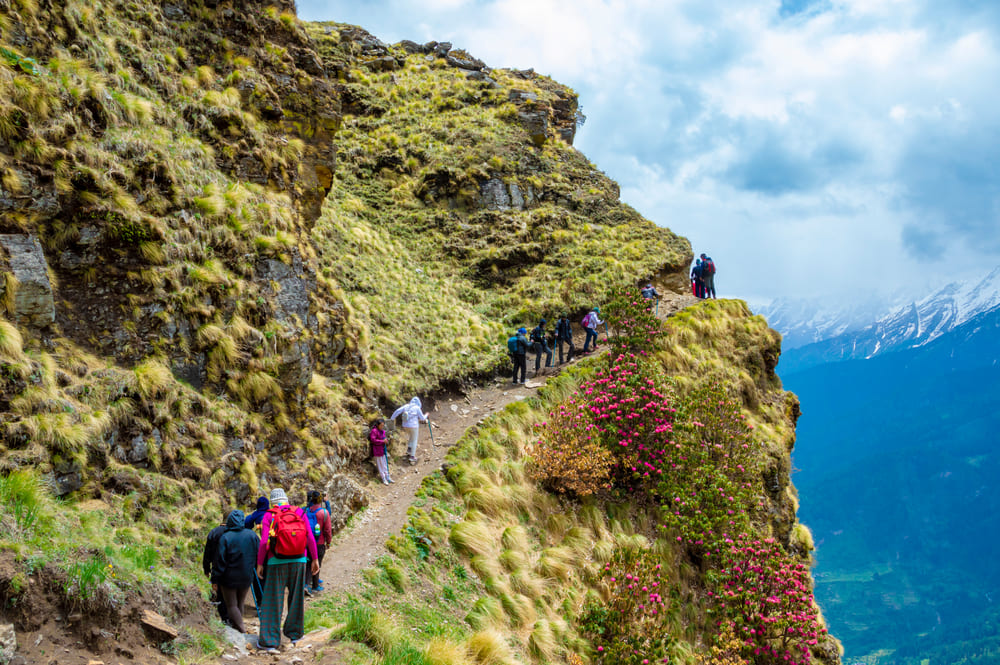
What makes Kuari Pass unique is the continuous exposure to Himalayan views. Unlike summit-focused treks, this route offers long ridge walks where massive peaks remain in view for hours. In February, snow settles across forests and open slopes, adding a true winter character without making the trail overly technical.
The trek gradually builds in difficulty, allowing trekkers time to adapt to snow walking and cold conditions. Campsites are often set in forest clearings or open meadows, offering peaceful winter evenings without extreme exposure.
Reaching Kuari Pass itself feels more like stepping into a grand viewpoint rather than conquering a sharp summit. On clear February days, you see peaks like Nanda Devi, Dronagiri, Kamet, and Hathi-Ghoda standing prominently across the skyline. For trekkers moving beyond beginner routes, this trek offers a satisfying step up.
Why Kuari Pass Stands Out in February?
- Reliable snow coverage across forests and open slopes
- Long panoramic ridge walks with uninterrupted Himalayan views
- Gradual difficulty suitable for improving trekkers
- Quiet campsites after the peak winter crowd has reduced
- Ideal transition trek from beginner to moderate winter routes
Kuari Pass Trek – Short February Itinerary
Day 1: Drive from Rishikesh to Pipalkoti
A scenic drive through the Alaknanda valley takes you to Pipalkoti, a small Himalayan town and the base for the Kuari Pass trek.
Day 2: Pipalkoti to Gulling Top
Drive toward the trek starting point and begin the ascent through oak and rhododendron forests to reach the campsite at Gulling Top.
Day 3: Trek from Gulling Top to Tali Forest Camp
Continue trekking through dense forest trails with occasional clearings that offer beautiful views of the surrounding Himalayan peaks.
Day 4: Trek from Tali Forest Camp to Kuari Pass and Back via Khullara Top
Start early for the climb to Kuari Pass, known for its spectacular panoramic views of peaks like Nanda Devi and Dronagiri, then descend back via Khullara Top.
Day 5: Trek from Tali Forest Camp to Pipalkoti via Gurson Bugyal and Auli
Descend through the vast meadows of Gurson Bugyal and pass through Auli before driving back to Pipalkoti.
Day 6: Drive from Pipalkoti to Rishikesh
Return to Rishikesh, concluding the memorable Kuari Pass winter trekking experience.
Lesser-Known Treks in February (For Quiet Seekers)
If crowded trails and busy campsites aren’t what you’re looking for, February reveals a quieter side of the mountains that many trekkers overlook. While popular winter routes continue to draw attention, several lesser-known trails remain calm, offering snow, space, and a more personal trekking experience.
These treks don’t focus on crowds or rush. Instead, they lead you through snow-covered forests, open clearings, and peaceful campsites where winter feels slower and more grounded. You’ll spend more time walking in silence, observing the landscape, and settling into the rhythm of the season.
If your idea of a winter trek includes solitude, steady trails, and undisturbed scenery, the following lesser-known treks in February are worth considering.
1. Dudhatoli Trek, Uttarakhand
Location: Uttarakhand (near Lohajung / Tharali region)
Duration: 5–6 Days
Trek Distance: ~30–35 km
Difficulty: Moderate
Best for: Trekkers seeking deep forest walks, solitude, and offbeat winter trails
Dudhatoli is defined by long stretches of oak and rhododendron forests, which remain snow-covered through February. The trail feels remote and undisturbed, with very little footfall compared to popular winter treks. Snow conditions are usually consistent, especially in forest sections and at campsites, creating a quiet and immersive winter setting.
This trek does not revolve around a dramatic summit or a rushed itinerary. Instead, it focuses on steady walking days, forest immersion, and peaceful camping. February conditions keep the experience calm and controlled, making Dudhatoli well-suited for trekkers who value solitude, slow movement, and an offbeat winter journey away from crowded routes.
2. Deoban Weekend Trek
Location: Uttarakhand (near Chakrata)
Duration: 2 days
Trek Distance: ~6–7 km
Difficulty: Easy
Best for: Quiet weekend trekkers, beginners, forest lovers
Deoban is a short and peaceful winter trek that works especially well in February. Known for its dense deodar forests and open viewpoints, the trail offers snow-covered sections without the pressure of long walking days or technical terrain.
February conditions keep the trek calm and manageable. Snow is often present on shaded forest trails and near the top, while the overall route remains well-defined. The short duration makes it ideal for trekkers who want a quiet winter experience over a weekend, without committing to a longer itinerary.
Rather than focusing on a summit push, Deoban is about walking through silent forests, enjoying wide Himalayan views, and spending time away from busy trails. For those seeking solitude, simplicity, and winter scenery in a compact format, Deoban fits well among February’s lesser-known treks.
3. Aancha Top Trek
Location: Uttarakhand (near Chakrata region)
Duration: 6 days
Trek Distance: ~22–25 km
Difficulty: Moderate
Best for: Trekkers seeking solitude, forest trails, and a quiet winter summit
Aancha Top is a lesser-known winter trek that remains calm and uncrowded in February. The trail moves through dense forests and open ridgelines, offering a balanced mix of steady walking and scenic viewpoints without the pressure of popular routes.
Snow coverage in February is usually consistent at higher sections, while lower trails remain manageable. Campsites tend to be quiet and remote, making this trek well-suited for those who prefer silence over summit rush. The final climb to Aancha Top is gradual, delivering wide views without technical difficulty, and rewarding trekkers who value space and simplicity in a winter landscape.
4. Bajre Dara Trek
Location: Uttarakhand (near Mussoorie / Yamunotri region)
Duration: 5 days
Trek Distance: ~25–30 km
Difficulty: Moderate
Best for: Trekkers looking for quiet ridge walks, forest sections, and offbeat winter trails
Bajre Dara is a lesser-known winter trek that offers a mix of forest walks and open ridge sections, making it well-suited for February. Snowfall at higher sections adds a winter character to this trail, while the route remains relatively uncrowded compared to popular Himalayan treks.
The trek is not about reaching a dramatic summit. Instead, it focuses on long, steady walks through oak and rhododendron forests, followed by wide ridge paths that open up to expansive mountain views. Campsites in February are calm and exposed, offering a sense of space and isolation that is hard to find on mainstream winter routes.
For trekkers seeking solitude, consistent winter conditions, and a slower-paced experience, Bajre Dara stands out as a rewarding offbeat option in February.
FAQs About Best Treks in February
1. Which trek is best for winter trekking in February?
2. Does February still offer proper snow trekking in the Himalaya
3. Is February better than January for beginner trekkers?
4. Are summit treks possible in February?
5. What level of fitness is required for February treks?
Final Thought
February is not just an extension of winter trekking—it’s the month when the mountains begin to settle. Snow remains deep on higher trails, conditions feel more predictable, and the rhythm of trekking becomes steadier and more deliberate. From beginner-friendly routes like Nag Tibba and Dayara Bugyal to longer winter journeys such as Brahmatal and Sandakphu, February offers a wide range of experiences without the intensity of peak winter crowds.
When planned thoughtfully, the best treks in February can be safe, immersive, and deeply satisfying.
That said, choose a trail that matches your fitness and experience, respect winter conditions, and give yourself time to adapt. Done right, February trekking rewards you with quiet trails, clear views, and a winter landscape that feels calm, vast, and unforgettable.