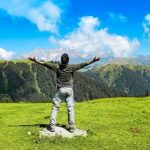
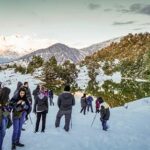
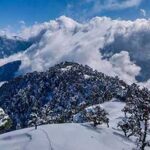
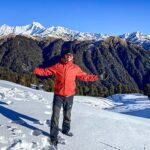
Everything you need to know before your first trek — from choosing the right trail to fitness, packing, and safety.
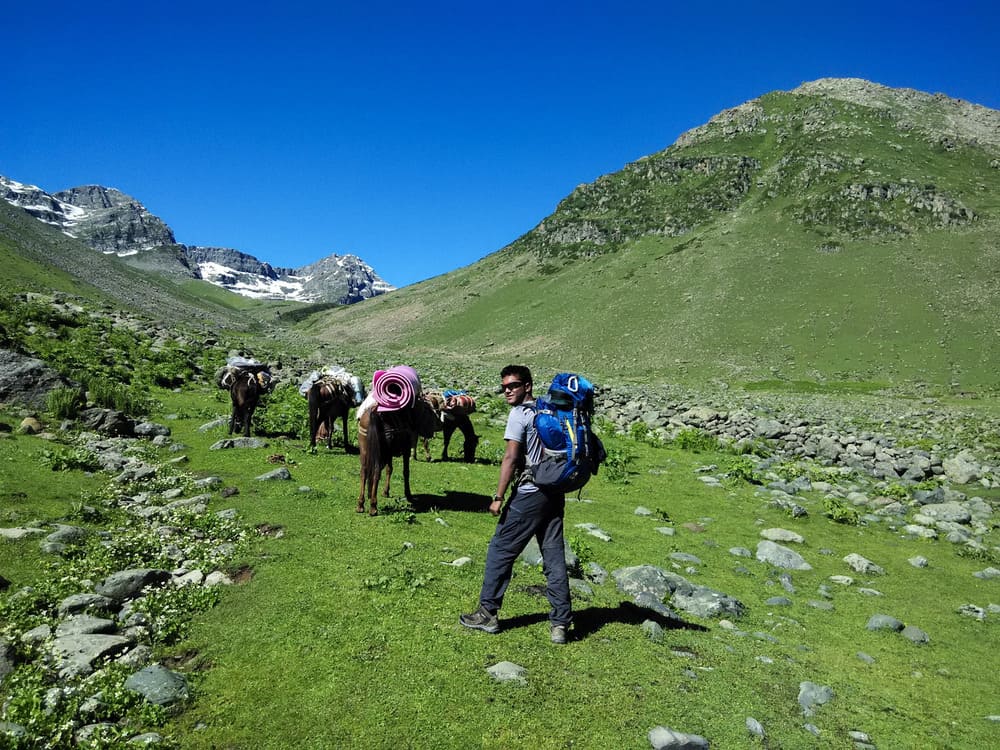
There was a time when I also didn’t know anything about trekking.
I just had this feeling — “I want to explore the Himalayas, but where do I even start?”
No information.
No Guidance.
No experience.
No idea about gears or companies.
But once I took that first step, everything changed.
Trekking didn’t just become a hobby for me; it became a way of life.
And if you’re reading this, maybe you’re at that same starting point.
So in this guide, I’m going to share everything I wish I knew before my first trek, in the simplest way possible.
- What is Trekking?
- Trekking vs Hiking
- Why Trekking in India Himalayas is Unique and Why You Should Experience It?
- Different Types of Treks You Find in Indian Himalayas
- 1. Day Treks (Your First Step Into the Mountains)
- 2. Weekend Treks (Short but Refreshing Escape)
- 3. Easy Treks (Ideal for First-Time Trekkers)
- 4. Moderate Treks (Where Challenge Meets Beauty)
- 5. Difficult Treks (For Experienced Trekkers)
- 6. High-Altitude Treks (Thin Air, Big Rewards)
- 7. Expeditions (The Ultimate Mountain Challenge)
- Popular Treks in India (Category-Wise)
- Trekking Seasons in India
- How to Choose Your First Trek (Without Overthinking It)?
- How to Make Yourself Fit for Your First Trek?
- 3. Train With Your Backpack and Trekking Shoes
- What Trekking Gears You Need For First Trek
- How to Pack for Your First Trek?
- On the Trail Tips (Make Your Trek Safer & Better)
- FAQs on Trekking in Indian Himalayas
What is Trekking?
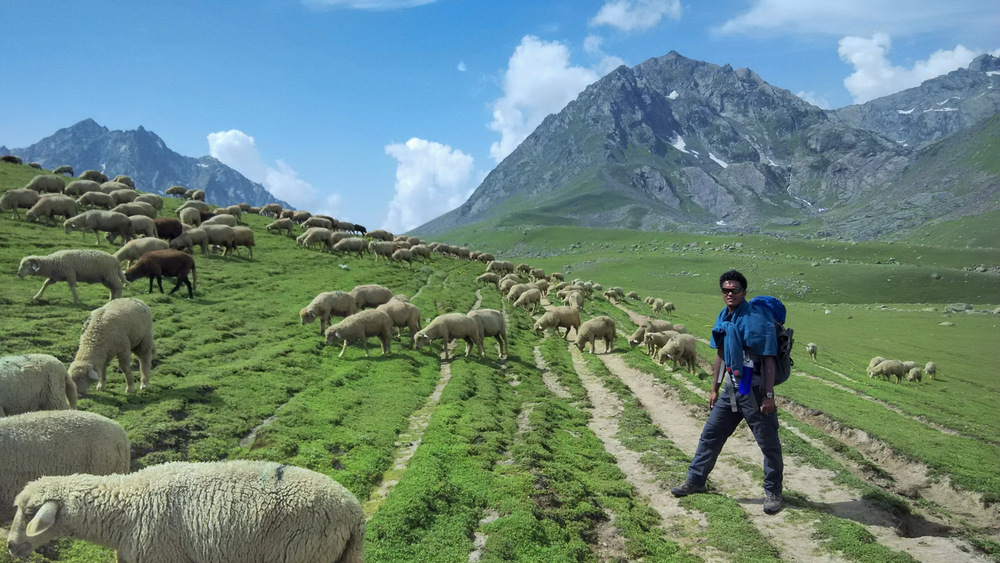
In simple words, trekking is walking through nature, but honestly, it’s much more than that.
It’s a multi-day journey, where you leave behind comfort and step into the mountains for days at a time — carrying your essentials, adapting to nature, and slowly moving closer to your goal with each step.
For example:
Imagine going on a 5-day trek like the Kedarkantha Trek.
You start from Sankri village, walk through dense forests of Govind Wild Life Sanctuary, camp under the stars beside Juda Ka Talab, wake up to freezing mornings, and slowly make your way to a snow-covered summit over the next few days. Every day feels like a new chapter.
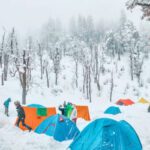
It’s about those small unforgettable moments in between — like waking up in a tent surrounded by mountains, sipping chai in freezing cold mornings, catching your breath on a steep climb, or watching the first sunlight hit snow-covered peaks.
I still remember my early trek to Roopkund — the mix of excitement and uncertainty, and how each day in the mountains felt like a completely new experience.
Trekking vs Hiking
Although you now understand what trekking really is, I’ve noticed many people still get confused about the difference between trekking and hiking.
So let’s clear that up in the simplest way.
| Feature | Hiking | Trekking |
| Duration | Few hours / 1 day | Multiple days (2–10+ days) |
| Difficulty | Easy | Moderate to difficult |
| Preparation | Minimal | Requires planning and fitness |
| Stay | No overnight stay | Camping / multi-day stay |
| Experience | Leisure and refreshing | Challenging and transformative |
What is Hiking?
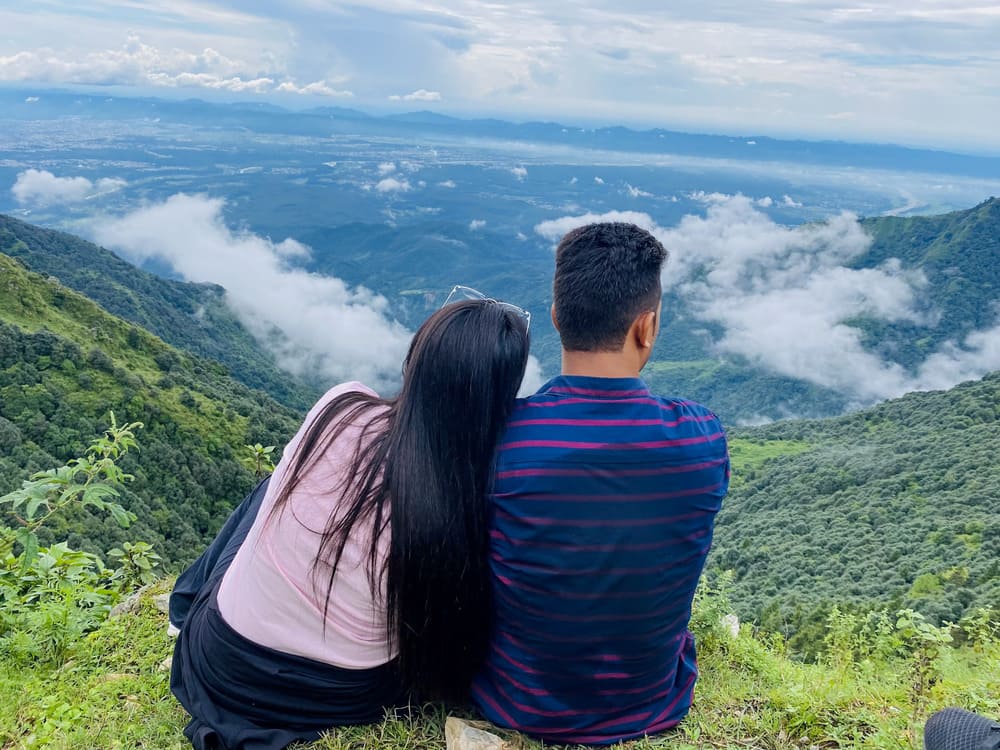
Hiking is a short-distance walk in nature, usually done on well-marked trails and completed within a single day. It’s more about enjoying the outdoors without too much physical or logistical challenge.
Example:
A hike to Triund near McLeodganj. You start in the morning from Dharamkot, walk through a forest trail, reach the top in a few hours, enjoy the view, and come back the same day.
To conclude;
- Hiking → Short, easy, usually a day
- Trekking → Longer, tougher, more immersive
If you want to dive further into the difference between trekking and hiking, check out this blog: Hiking vs Trekking Difference
Why Trekking in India Himalayas is Unique and Why You Should Experience It?
Over time, I’ve realized one thing: trekking in the Indian Himalayas is not just about mountains, it’s about experiencing completely different worlds in one country.
One trek can take you through snow-covered landscapes, while another can feel like walking through dense green forests after rain.
And the surprising part?
Both experiences exist within the same country, just in different regions.
That’s what makes trekking in the Indian Himalayas so special. You don’t just explore places, you explore variety.
1. The Himalayas — Raw, Powerful, and Unforgettable
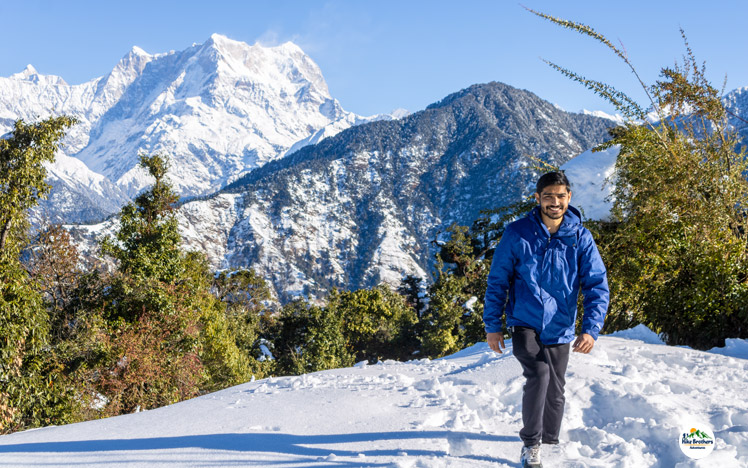
The Himalayas are where most trekking journeys begin, and once you go there, you understand why.
- Massive snow-covered peaks
- Endless ridgelines
- Silent forests and wide open meadows
There’s a certain feeling in the Himalayas that’s hard to explain — it’s peaceful, but at the same time, it makes you feel small in the best possible way.
Treks like Roopkund or Hampta Pass are perfect examples of this experience.
2. Changing Landscapes That Keep Surprising You
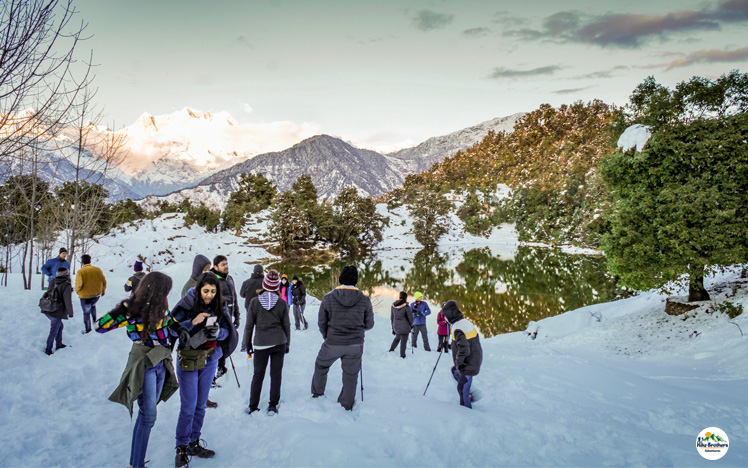
What I personally love about trekking in the Himalayas is how quickly the scenery changes.
- One day you’re walking through dense forests
- Next day you’re in open meadows
- And suddenly you’re surrounded by snow or rocky terrain
It never feels repetitive. Every day on a trek feels like a completely new environment.
3. Monsoon Magic in the Himalayas
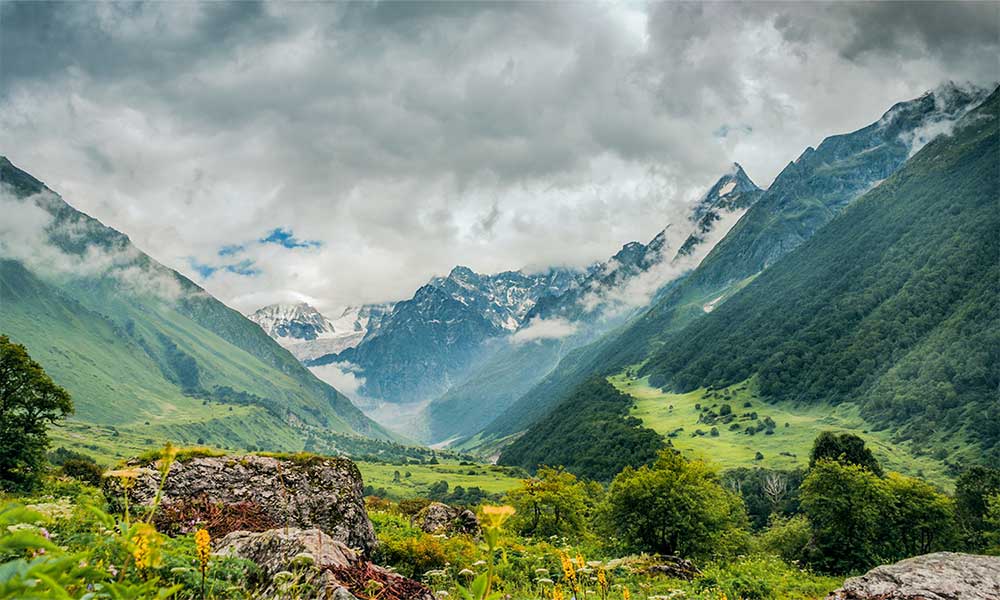
If you think trekking in the Himalayas is only about snow and clear skies, the monsoon completely change your perspective.
They offer you:
- Lush green valleys coming alive after the rains
- Streams and waterfalls flowing everywhere
- Mist covering the entire landscape
It feels less like a trek and more like stepping into a completely different side of the mountains — quieter, greener, and more raw.
4. Raw and Untouched Beauty of Northeast India
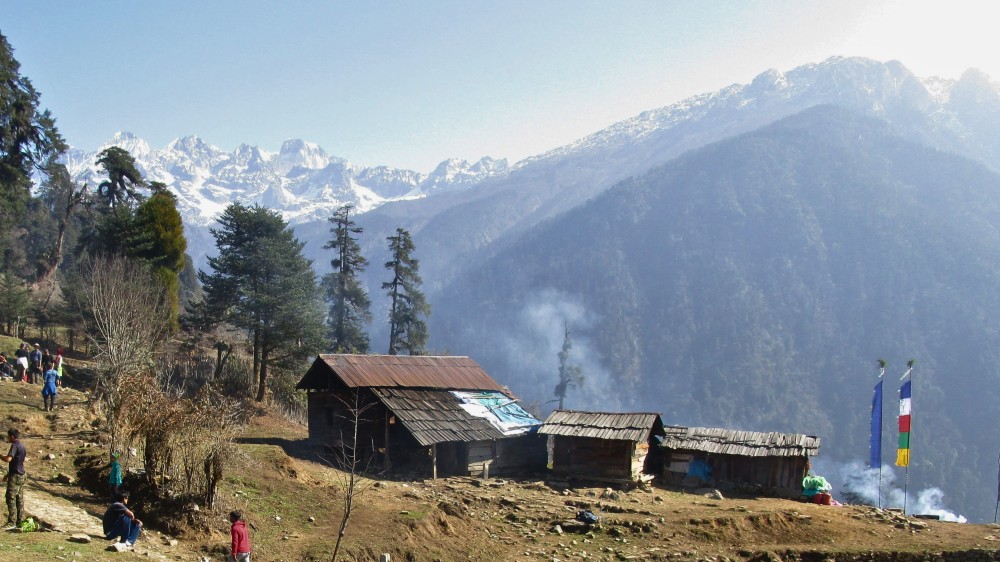
Then comes the Northeast — a side of India that still feels unexplored.
- Dense forests
- Unique trails like living root bridges
- Fewer crowds, more authenticity
Here, trekking feels quieter, deeper, and more connected to nature.
5. Every Trek Feels Like a New Story
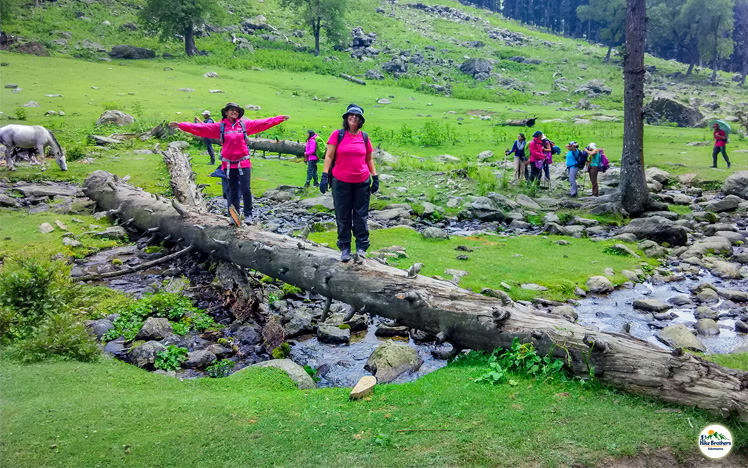
This is something I’ve realized after multiple treks —
In many other countries, trekking can start to feel similar after a while.
But in India?
Every trek has a different story
Every region has a different vibe
Every journey feels new
And that’s what keeps you coming back.
So, you don’t just go trekking in the Indian Himalayas once and feel done. In fact, you go once and then realize there’s so much more to explore.
Different Types of Treks You Find in Indian Himalayas
Now one question must be coming to your mind:
“What kind of trek should I even start with?”
And honestly, I had the same confusion when I started.
Because not every trek is the same — some are short and easy, while others can push you to your limits over several days in the mountains.
The good thing is, trekking is not something you jump into at the highest level.
You grow into it, step by step.
So let me break it down for you in the simplest way.
| Trek Type | Duration | Difficulty Level | Altitude Range | Best For | Example Treks |
| Day Treks | 1 Day | Easy | Below 8,000 ft | Complete beginners | Triund, Benog Tibba Trek |
| Weekend Treks | 2–3 Days | Easy | 8,000–10,000 ft | Beginners with limited time | Nag Tibba Trek |
| Easy Treks | 3–5 Days | Easy | Up to 11,000 ft | First-time trekkers | Beas Kund, Bhrigu Lake |
| Moderate Treks | 4–7 Days | Moderate | 10,000–14,000 ft | Fit beginners & intermediate | Brahmatal, Hampta Pass |
| Difficult Treks | 6–10 Days | Difficult | 14,000–18,000 ft | Experienced trekkers | Goechala, Rupin Pass |
| High-Altitude Treks | 6–12 Days | Moderate to Difficult | Above 15,000 ft | Experienced trekkers | Pin Parvati Pass |
| Expeditions | 10+ Days | Extreme | 18,000 ft+ | Advanced / mountaineers | Stok Kangri, Expedition climbs |
1. Day Treks (Your First Step Into the Mountains)
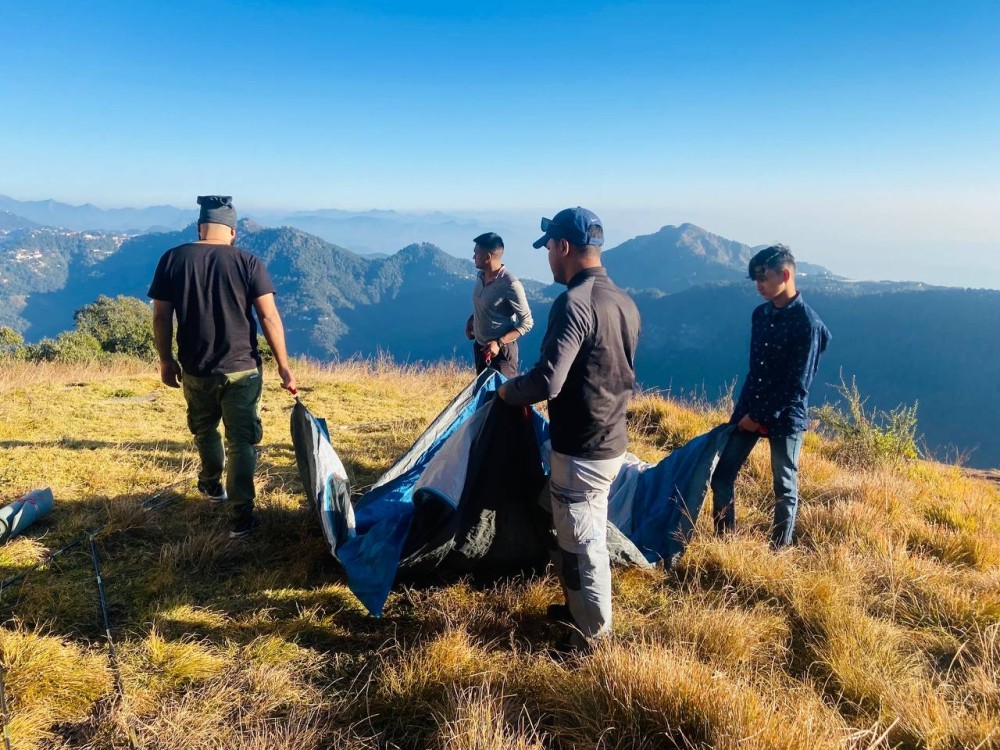
Day treks are the easiest way to begin. These are short walks that you can complete within a single day, without needing to stay overnight. These are generally called hikes.
Example: A trek to Benog Tibba, where you start in the morning from Mussorie, walk through a scenic trail, and return by evening.
Best for: Complete beginners who just want to experience trekking for the first time.
2. Weekend Treks (Short but Refreshing Escape)
If you want a quick break from your routine, weekend treks are perfect. These usually last 2–3 days and give you a taste of camping and mountain life.
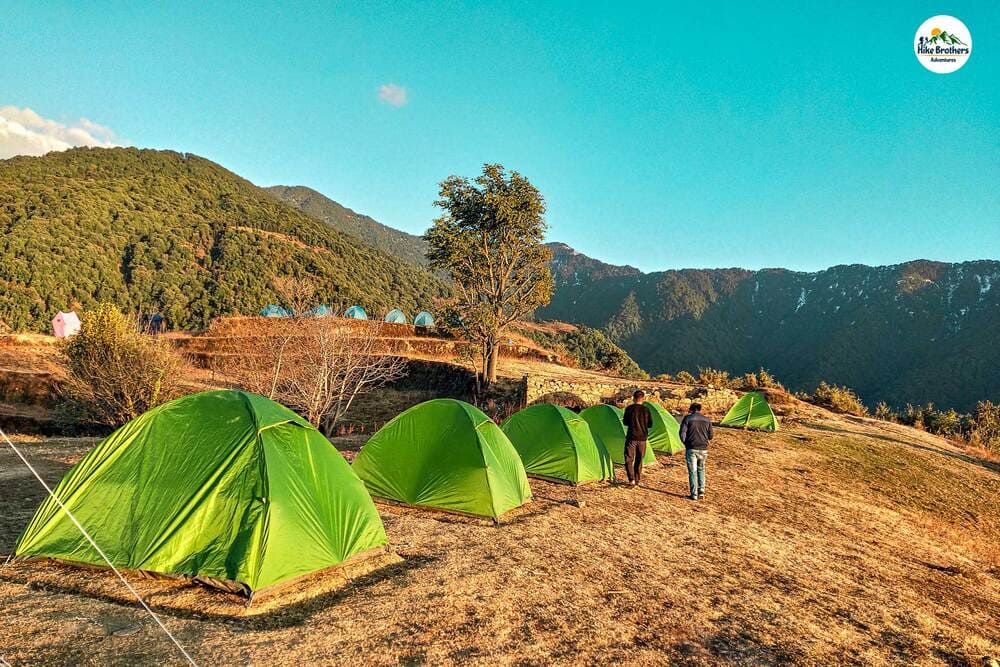
Example: The Nag Tibba Trek, where you spend a night in the mountains and return the next day feeling refreshed.
Best for: Beginners with limited time who want a slightly deeper experience than a day trek.
3. Easy Treks (Ideal for First-Time Trekkers)
Easy treks are usually 3–5 days long and don’t require prior trekking experience. They are designed to help you build confidence while enjoying beautiful landscapes.
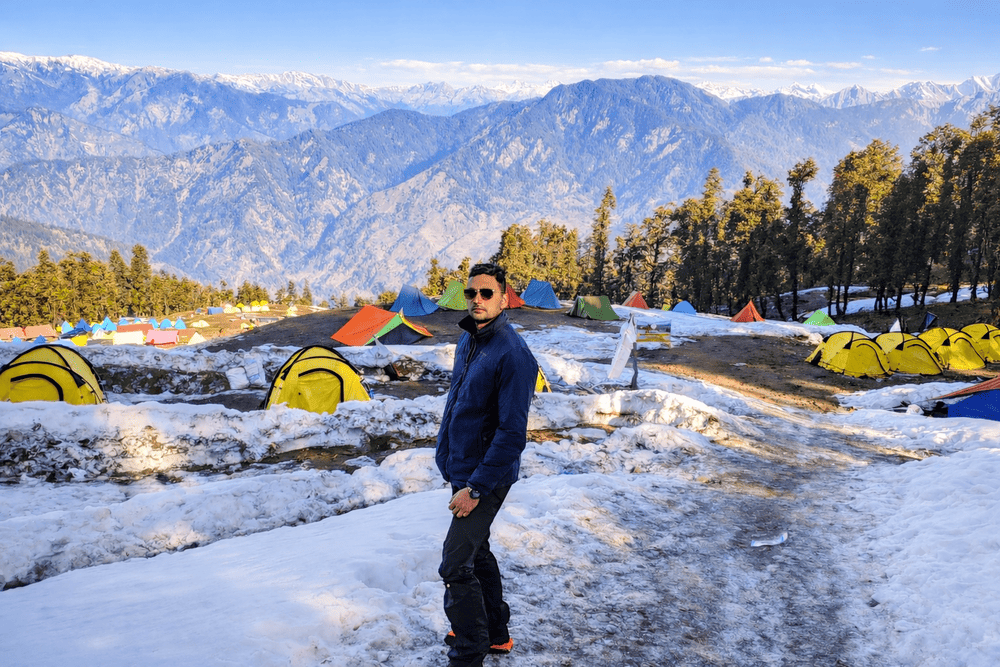
Example: The Kedarkantha Trek, where you walk through forests, campsites, and gradually reach a stunning summit.
Best for: First-time trekkers who want a complete Himalayan experience without too much difficulty.
4. Moderate Treks (Where Challenge Meets Beauty)
Moderate treks require better fitness and stamina. The trails are longer, steeper, and sometimes involve altitude gain.
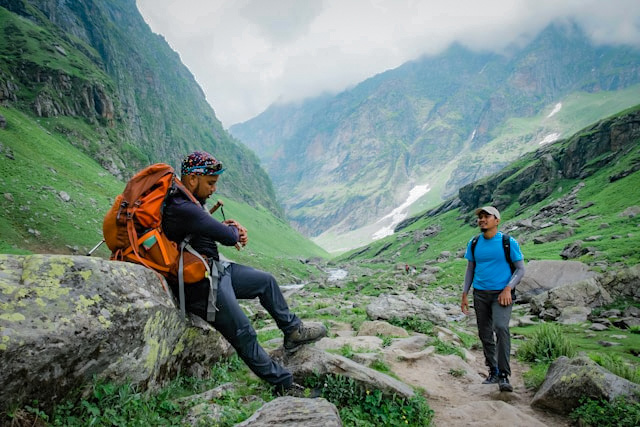
Example: The Hampta Pass Trek, where you cross from green valleys to barren landscapes, experiencing dramatic changes in terrain.
Best for: Fit beginners or trekkers who have already done 1–2 easy treks.
5. Difficult Treks (For Experienced Trekkers)
These treks push your limits — physically and mentally. They involve long trekking days, high altitude, and sometimes unpredictable conditions.
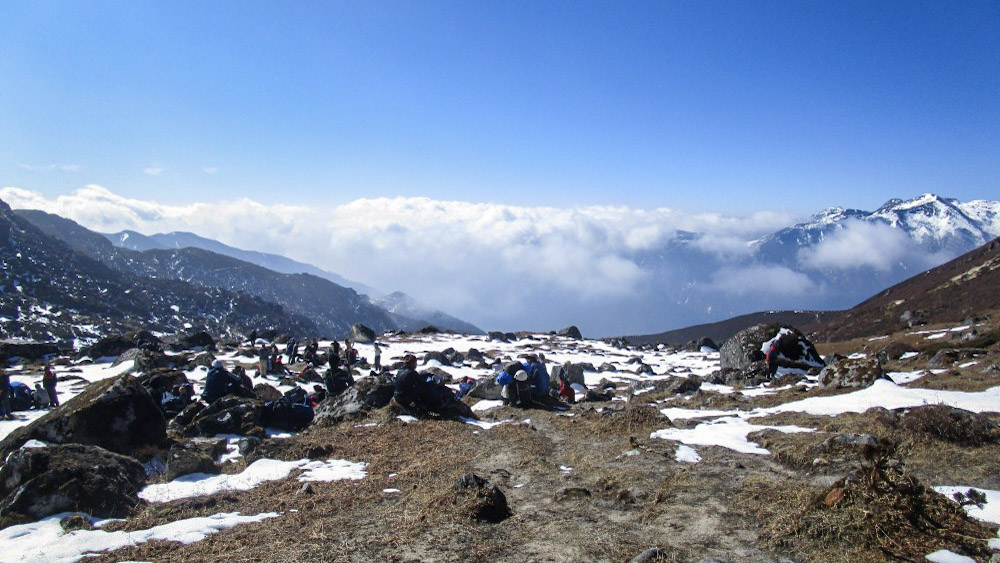
Example: The Goechala Trek, offering breathtaking views of Kanchenjunga but demanding serious endurance.
Best for: Experienced trekkers who are comfortable with multi-day high-altitude trekking.
6. High-Altitude Treks (Thin Air, Big Rewards)
High-altitude treks take you above 12,000 ft, where oxygen levels drop, and acclimatization becomes very important.
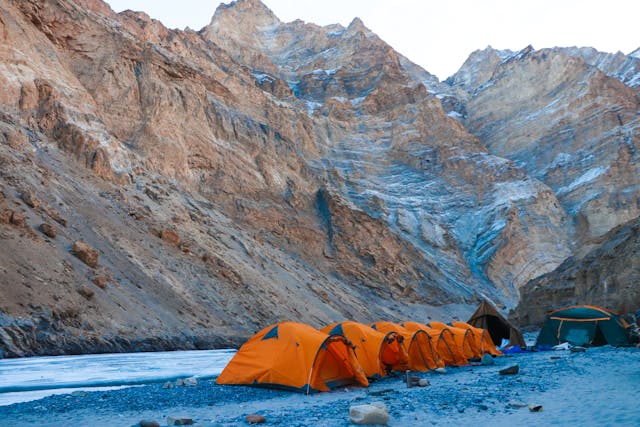
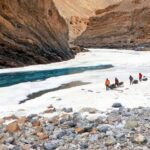
Example: The Chadar Trek is known for its extreme altitude and challenging temperature, which dips to –30°C.
Best for: Physically fit trekkers with prior trekking experience.
7. Expeditions (The Ultimate Mountain Challenge)
Expeditions are on a completely different level. These involve technical climbing, extreme weather, and require proper mountaineering skills.
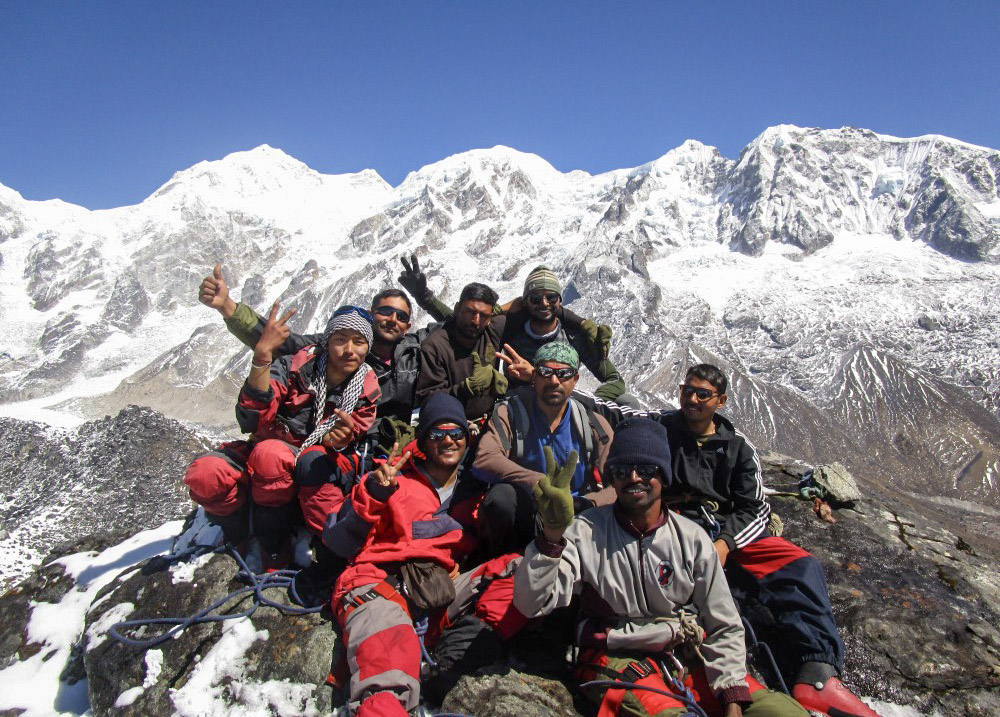
Example: Climbing peaks like Stok Kangri, where trekking turns into a true mountaineering experience.
Best for: Advanced trekkers and trained mountaineers.
Popular Treks in India (Category-Wise)
Below is a category-wise list of popular treks in India, so you can quickly explore options based on your level and comfort.
| Day Treks | Weekend Treks / Easy Treks | Moderate Treks | Difficult Treks / High-Altitude Treks | Expeditions |
| Triund | Nag Tibba | Kedarkantha Trek | Rupin Pass Trek | Friendship Peak |
| Kheerganga | Prashar Lake | Chandrakhani Pass Trek | Goechala Trek | Yunam Peak Expedition |
| George Everest Peak | Kareri Lake | Dayara Bugyal Trek | Bali Pass Trek | Stok Kangri Expedition |
| Benog Tibba | Chopta Chandrashilla | Ali Bedni Bugyal Trek | Kedartal Trek | Mentok Kangri |
| Bhadraj Hill | Deoban | Brahmatal Trek | Auden’s Col | Kanamo Peak Expedition |
| Deoriatal Trek | Pindari Glacier Trek | Aancha Top Trek | Everest Base Camp Trek | |
| Moila Top Trek | Bijli Mahadev | Dudhatoli Trek | Manaslu Circuit Trek | |
| Madmaheshwar Trek | Chirbatiya Weekend Trek | Bagji Bugyal Trek | Annapurna Circuit Trek | |
| Rudranath Trek | Bhrigu Lake Trek | Beas Kund Trek | Chadar Trek | |
| Bhadraj Trek | Valley Of Flowers | Chandrabhaga Glacier Trek | ||
| Kipling Trail Trek | Kuari Pass Trek | Buran Ghati Trek | ||
| Nag Thatch Trek | Hampta Pass Trek | Pin Parvati Pass Trek | ||
| Phulara Ridge Trek | Pangarchulla Peak Trek | |||
| Sandakphu Phalut Trek | Pin Bhaba Pass Trek | |||
| Ranthan Kharak Trek | ||||
| Miyar Valley Trek | ||||
| Surya Top Trek | ||||
| Gaumukh Gangotri Trek | ||||
| Ranthan Kharak Trek | ||||
| Sar Pass Trek | ||||
| Gulabi Kantha Trek | ||||
| Panwali Kantha Trek | ||||
| Bajre Dara Trek | ||||
| Markha Valley Trek | ||||
| Khopra Ridge | ||||
| Dodital Darwa Pass Trek | ||||
| Tarsar Marsar Trek | ||||
| Pindari Galcier Trek | ||||
| Harki Dun Trek |
Trekking Seasons in India
Now that you’ve seen different types of treks and actual trek options, there’s one more important piece you need to understand:
Not every trek is meant for every season.
In the Himalayas, trekking changes completely with the seasons. The same trek can feel entirely different depending on when you go.
That’s why, before choosing your trek, it’s important to understand how trekking seasons work in India.
Let me simplify it for you.
Summer Season (April – June) — Clear Skies and Comfortable Starts
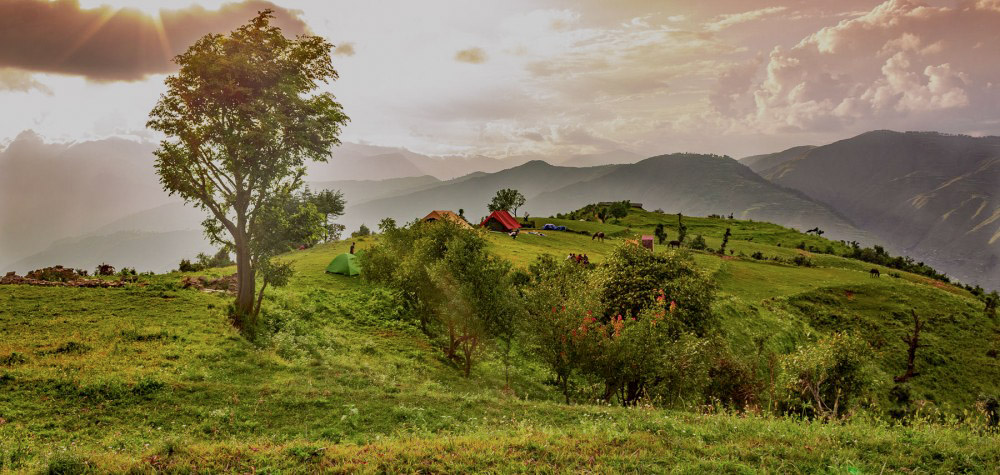
Summer is when the Himalayas start opening up after the harsh winter. The weather becomes stable, the skies are clear, and the views are absolutely stunning.
This is the time when you truly get to see the grand scale of the Himalayan mountains — long ridgelines, snow still visible on peaks, and pleasant weather during the day.
What it feels like:
Walking through forests in cool weather, reaching campsites with wide-open views, and enjoying clear sunrises without extreme cold.
Best for: Beginners and those looking for a comfortable first trekking experience.
Popular summer treks:
- Ali Bedni Bugyal Trek
- Dayara Bugyal Trek
- Har Ki Dun Trek
- Chopta Chandrashila Trek
Monsoon Season (July – September) — Risky, Yet Incredibly Beautiful in the Himalayas
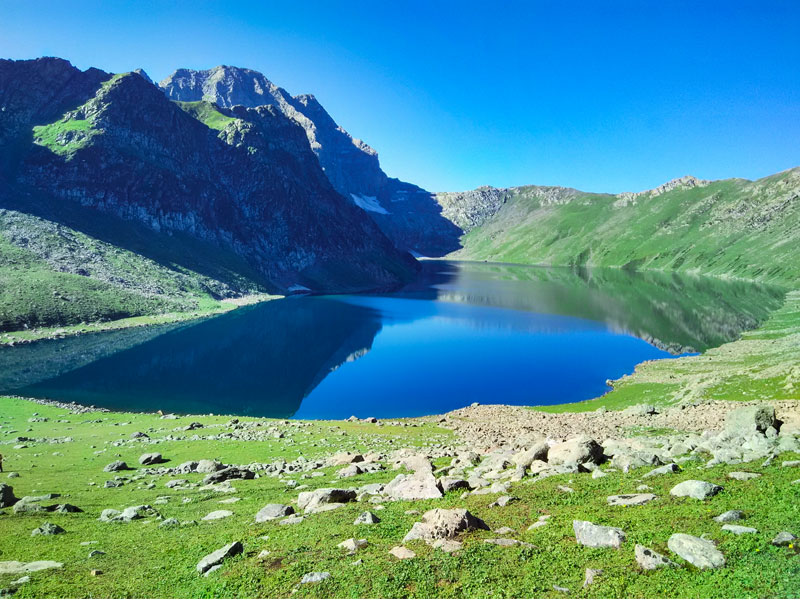
Monsoon in the Himalayas is a bit of a mixed experience.
On one hand, the mountains become lush, vibrant, and full of life — valleys turn green, flowers bloom, and everything feels fresh.
But on the other hand, this is also the season when trails can get slippery and unpredictable.
What it feels like:
Walking through mist-covered valleys, crossing streams, hearing the sound of rain in the mountains, and seeing landscapes come alive in a completely different way.
But here’s the reality (important):
- Higher altitude and exposed routes can be risky
- Landslides and trail conditions can change quickly
- Not all Himalayan treks are suitable in the monsoon
So what should you do?
Instead of avoiding trekking completely, choose monsoon-friendly Himalayan treks — these are usually:
- Located in rain-shadow regions
- Or relatively safer, well-defined trails
Popular Himalayan treks in monsoon:
- Valley of Flowers (Uttarakhand): One of the best experiences during the monsoon, with blooming flowers everywhere
- Hampta Pass Trek (Himachal Pradesh): A unique trek where you move from green valleys to a dry, barren landscape
- Bhrigu Lake Trek (Himachal Pradesh): Short, scenic, and suitable for monsoon conditions
My Honest Take
Monsoon trekking in the Himalayas is not for everyone.
So, if you’re a beginner:
- Choose carefully
- Go with proper guidance
- Avoid risky routes
If you pick the right trek, this season can show you a completely different side of the himalayas.
Autumn Season (September – November) — Crisp Air and Stunning Views
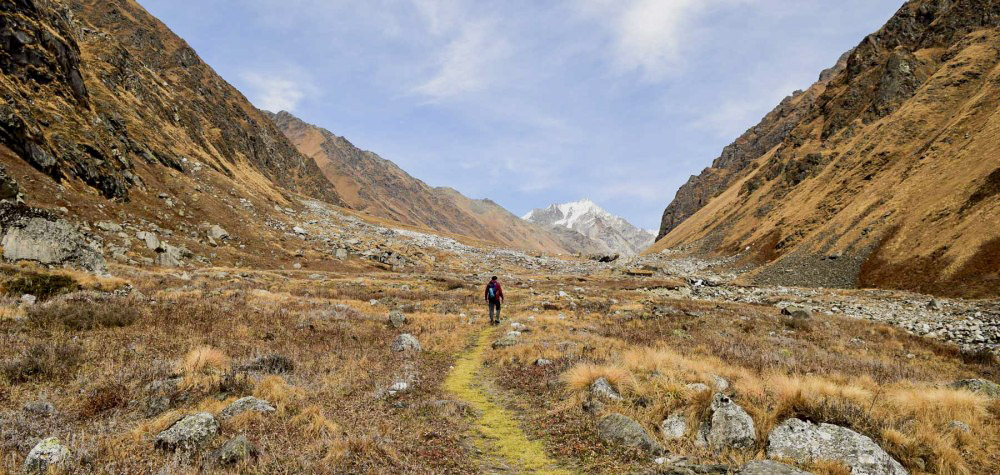
Right after the monsoon ends, the himalayas become incredibly clear.
This is when you get those picture-perfect views — sharp peaks, deep blue skies, and fresh landscapes washed clean by the rains.
What it feels like: Cool, fresh air, long, clear views, and a perfect balance between comfort and challenge.
Best for: Those who want the best visibility and slightly more adventurous treks.
Popular autumn treks:
- Goechala Trek
- Sandakphu Trek
- Gaumukh Tapovan Trek
- Phulara Ridge Trek
Winter Season (December – February) — Snow, Silence and Different Kind of Magic
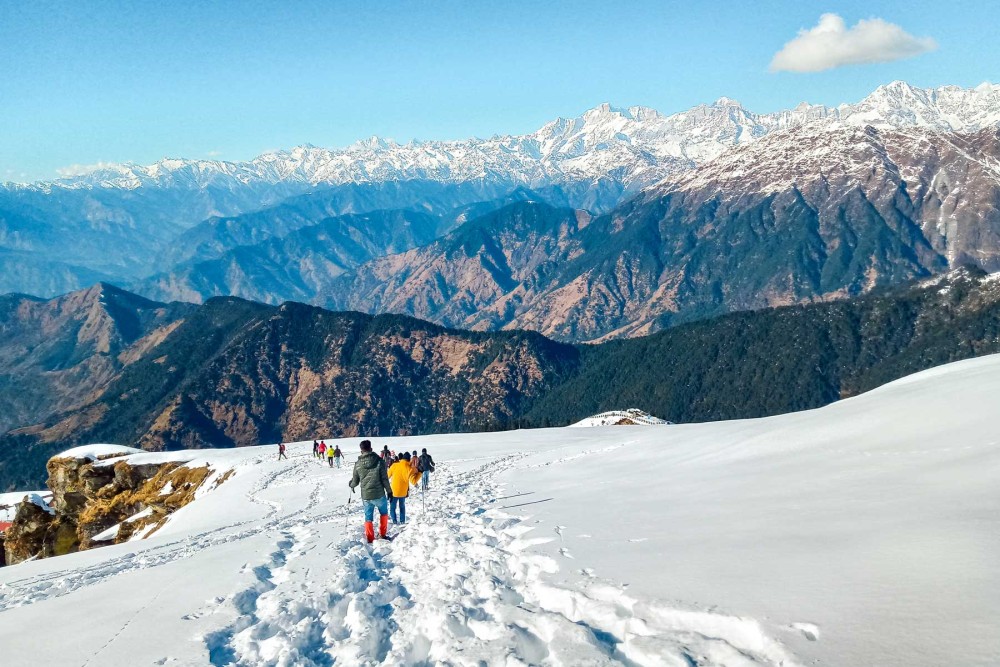
Winter in the Himalayas feels like stepping into a completely different world.
Everything slows down. The trails go quiet. And the mountains get covered in a blanket of snow that changes the entire experience.
It’s not just trekking anymore — it feels like you’re walking through a dream.
What it feels like:
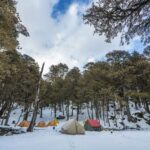
Waking up in a tent with snow all around you…
holding a cup of hot chai in freezing cold air…
hearing the crunch of fresh snow under your feet as you walk…
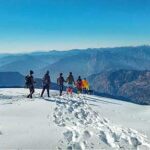
and finally standing on a summit, surrounded by endless white peaks.
There’s a silence in the mountains during winter that you don’t experience in any other season, and that’s what makes it so special.
What makes winter treks unique:
- Snow-covered trails that transform familiar routes
- Crystal-clear views on cold mornings
- Fewer crowds, more peaceful experience
- A stronger sense of adventure
Popular winter treks you can consider:
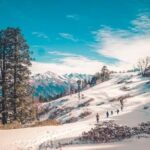
- Kedarkantha Trek: One of the best beginner-friendly snow treks in India
- Brahmatal Trek: Offers Frozen lakes and stunning mountain views
- Dayara Bugyal Trek: Vast snow-covered meadows that feel unreal
- Kuari Pass Trek (Winter): Stunning views of Nanda Devi and a perfect mix of forest, meadows, and snow
To sum up, winter trekking might look challenging, and yes, it is slightly tougher than summer.
But if you’re prepared and choose the right trek, it becomes one of the most unforgettable experiences you’ll ever have.
How to Choose Your First Trek (Without Overthinking It)?
Now that you know different trekking options and seasons, the real question is:
“Which trek should you actually choose?”
I’ve been in that situation — confused, excited, and honestly a little overwhelmed.
Over time, I’ve realized that choosing your first trek is not about picking the “best” one. It’s about picking the right one for you.
Let me simplify it for you.
1. Start With Your Fitness Level (Be Honest)
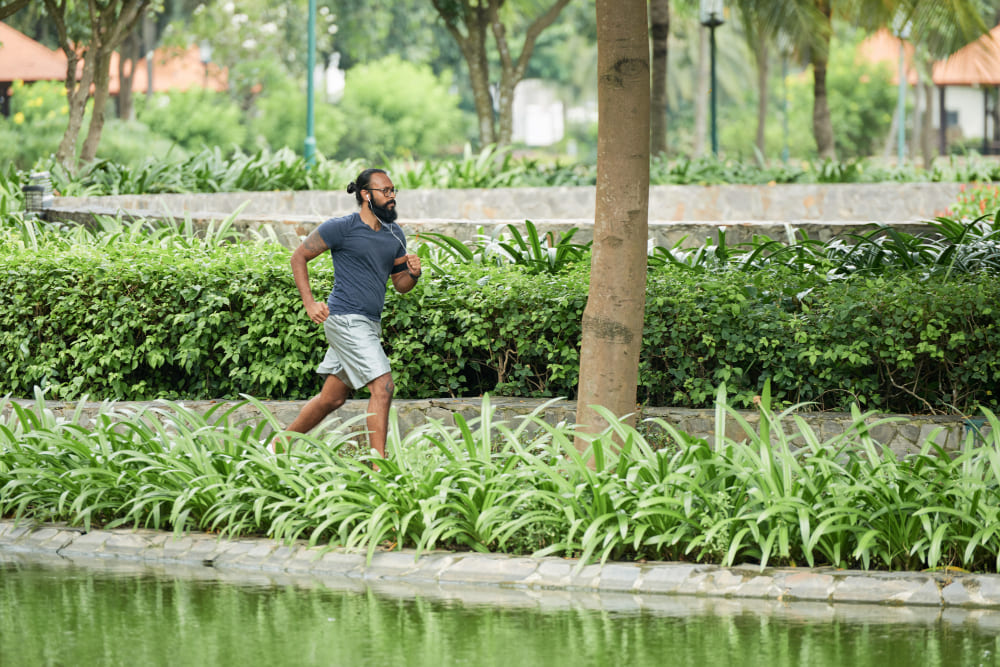
Before you choose any trek, pause for a moment and ask yourself honestly:
“Am I actually ready for this?”
Not mentally — physically.
You don’t need to be super fit, but you should have a basic level of stamina.
Ask yourself:
- Can I walk continuously for 4–5 hours without feeling exhausted?
- Do I do any kind of physical activity regularly?
If the answer is no, that’s completely fine — everyone starts somewhere.
Here’s a simple way to decide:
- Beginner / No fitness routine: Start with Day Treks or Weekend Treks
- Average fitness (you walk/run sometimes): Go for Easy Treks
- Good fitness (active lifestyle, decent stamina): You can try Moderate Treks
Remember, your goal should not be to prove how strong you are. In fact, it’s to choose a trek where you can:
- Enjoy the journey
- Complete it comfortably
- And feel confident for the next one
2. Plan at Least 2–3 Months in Advance
One of the biggest mistakes most beginner trekkers make is planning at the last moment.
From my experience, it’s always better to plan your trek at least 2–3 months in advance.
This gives you time to:
- Prepare physically
- Build basic stamina
- Arrange your trekking gear
It also helps you:
- Book transport (flights, trains, buses) at cheaper rates
- Get better deals on trek bookings
A little planning can save you both money and stress.
3. Start With an Easy and Short Trek
This is the most important decision.
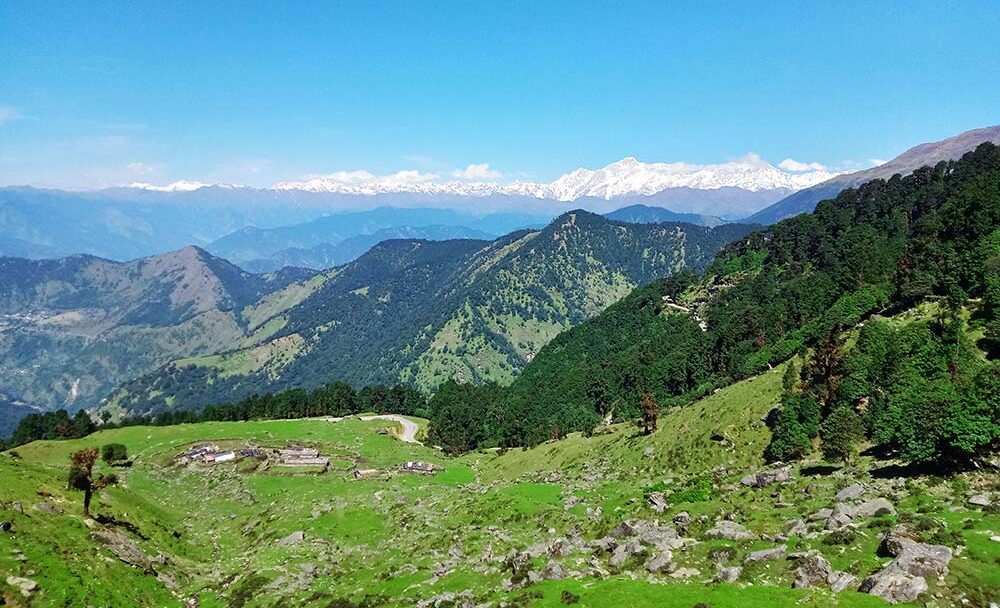
As a beginner, your goal should not be to challenge yourself too much. It should be to enjoy and complete your first trek confidently.
So, choose a trek that has:
- Short duration
- Low altitude
- Easy trail
This reduces:
- Risk of exhaustion
- Chances of Acute Mountain Sickness (AMS)
- Possibility of injury
Here are some Beginner-friendly trek options you can consider:
- Nag Tibba Trek
- Chopta Chandrashila Trek
- Bhrigu Lake Trek
- Kareri Lake Trek
- Prashar Lake Trek
- Beas Kund Trek
These are perfect to start your journey.
4. Choose the Right Season (Don’t Ignore This)
Even an easy trek can become difficult if you choose the wrong season.
So, as a beginner, it’s best you start with:
- Summer (April–June)
- Autumn (Sept–Nov)
These seasons offer clear weather, stable conditions, and a better trekking experience.
You should avoid starting with heavy snow treks or peak monsoon treks because:
- Trails become difficult
- Weather becomes unpredictable
- Camping gets challenging
5. Go With a Reliable Trekking Organization
When I started, I realized something important:
Trekking is not just walking — it involves planning, safety, and logistics.
So, if you go DIY as a beginner, you’ll have to manage:
- Route planning
- Permissions
- Food and cooking
- Camping gear
This can become overwhelming and risky for a beginner trekker like you. That’s why I always suggest booking your first trek with a trusted trekking organization as they:
- Have trained and certified team members
- Handle logistics in an effective way
- Ensure safety with high-end gear and equipment
- Have years of experience in running treks in the Himalayas
As a result, this allows you to focus on your trekking experience instead of worrying about everything else.
Trust me, doing so will make your first trek a lifetime experience.
If you want to know more about the various trekking organizations in India, read this: 3 Best Trekking Companies In India
6. Save Money With Smart Booking
Budget is a concern for most beginner trekkers. So, here’s what I personally recommend:
- Book a trek in groups (3+ people) as most trekking companies offer discounts on group bookings.
- Book your trek during festivals as trekking companies run heavy discounts during these days.
Planning smartly can reduce your overall trek cost significantly.
7. Trek With the Right People
Your first trek experience depends a lot on who you go with.
So, if possible:
- Go with friends who have trekking experience
- Or join a group with experienced trekkers
Experienced trekkers can:
- Guide you
- Motivate you
- Help you during tough moments
Overall, don’t try to prove anything on your first trek. Also, don’t chase difficulty and don’t overthink options. Instead, just pick:
- Beginner-friendly trek
- Right season
- Right people
And go.
How to Make Yourself Fit for Your First Trek?
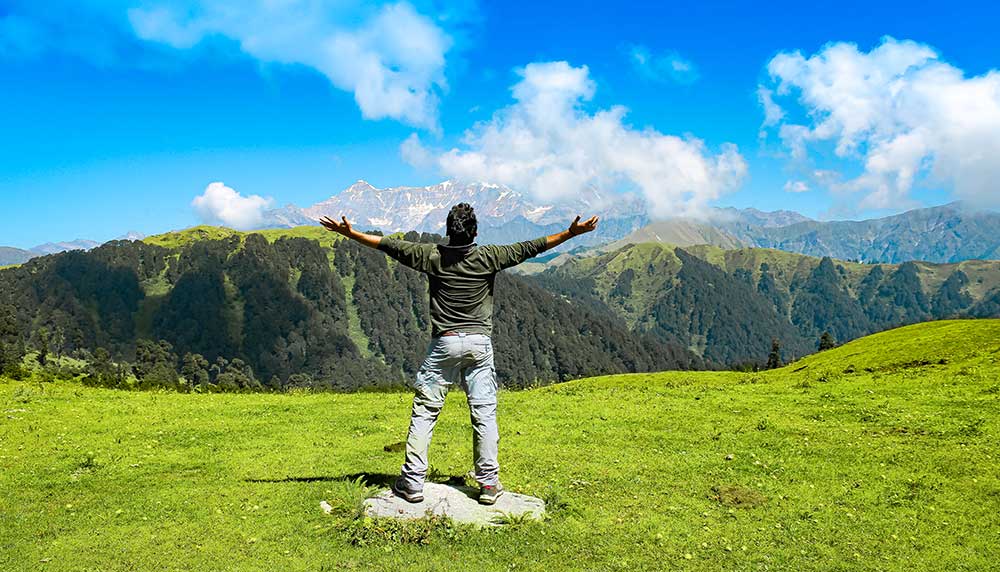
You don’t need to be super fit to start trekking. I wasn’t when I started either.
But one thing I’ve learned from experience is this:
A little preparation makes a huge difference on the mountain.
If you prepare even slightly, your trek becomes:
- More enjoyable
- Less exhausting
- And much more comfortable
So, here’s what actually works.
1. Start Your Fitness Training at Least 1 Month Before
Don’t wait till the last week.
Start your preparation at least 3–4 weeks before your trek (earlier is even better).
This gives you time to:
- Build stamina
- Strengthen your body
- Mentally prepare yourself
Even 30 minutes a day is enough if you stay consistent.
2. Focus on Stamina, Strength and Lung Capacity
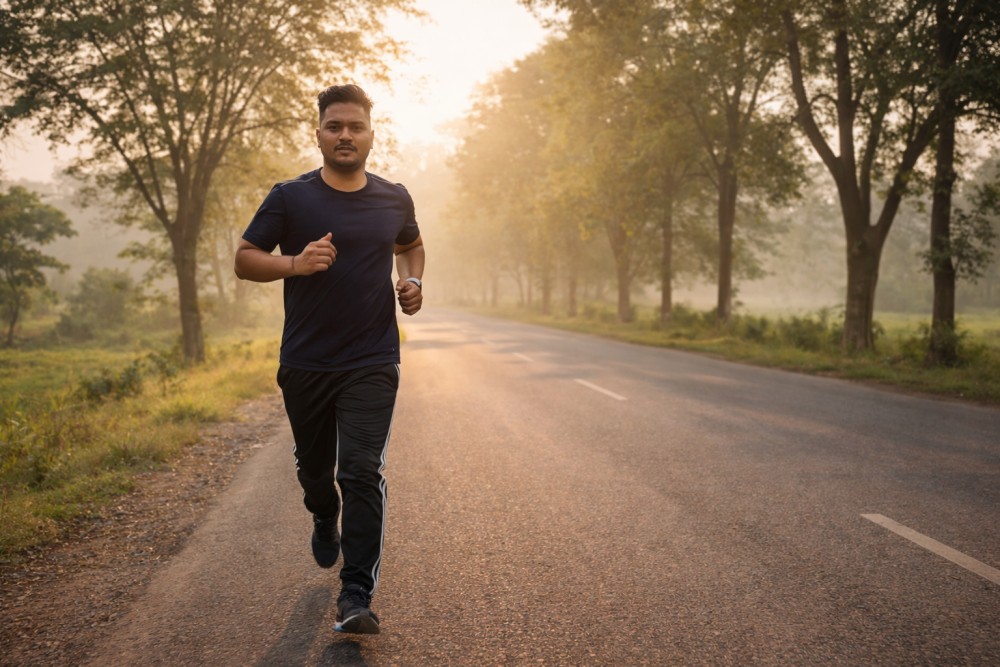
Trekking is not just walking; it’s walking uphill, for hours, sometimes with a weight on your back.
So your training should include:
Stamina Building Exercises (Most Important)
Start simple:
- Begin with 1 km of jogging or brisk walking
- Gradually increase to 4–5 km
- Aim to cover 5 km in around 40–45 minutes
This improves your endurance, leg strength and overall stamina.
Strength Training
You’ll be carrying a backpack on trek, so your body needs strength.
To gain strength, focus on:
- Legs (squats, lunges)
- Core (planks, basic exercises)
- Upper body (helps with balance & load)
This will help you:
- Walk longer without fatigue
- Handle steep climbs
- Maintain balance on tricky trails
Breathing Exercises
This is something most people ignore, but it’s very important.
Why it matters:
- Helps increase lung capacity
- Improves performance at high altitude
- Makes acclimatization easier
Even simple deep breathing exercises can help.
3. Train With Your Backpack and Trekking Shoes
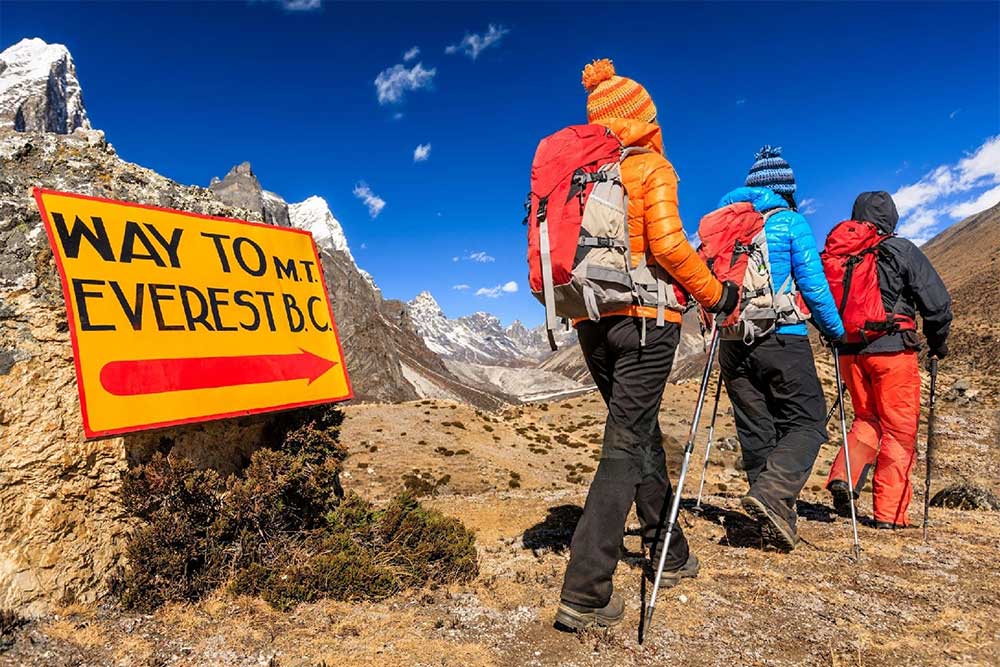
This is a game-changer, as most beginners make the mistake of using their gear for the first time on the trek itself.
Don’t do that.
Backpack Training
Fill your backpack with some weight and walk or climb stairs with it. This helps you get used to the load and adjust straps as per your comfort.
Break Your Trekking Shoes
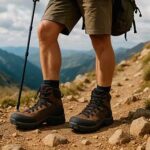
This is also very important to ensure that your shoes have a good fit and are comfortable. So, wear them during walks and training. This helps break in your new trekking shoes and prevent shoe bites and blisters during the actual trek, which is common with new shoes.
If you want to know more about trekking shoes, read – How to Choose Right Trekking Shoes?
4. Go for a Day Hike (If Possible)
Before your actual trek, try doing a small hike near your city. This:
- Gives you a real feel of trekking
- Builds confidence
- Prepares you mentally
And don’t forget to carry your backpack and wear your trekking shoes during this hike.
What Trekking Gears You Need For First Trek
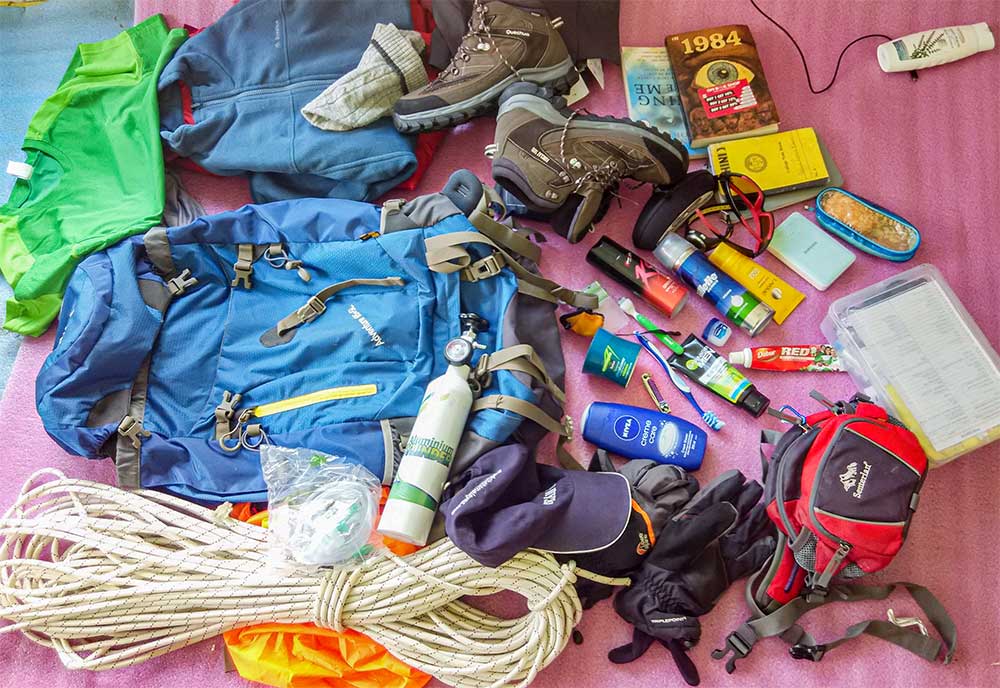
When I started trekking, I made one big mistake…
I overthought everything.
I believed I needed the best, most expensive gear before even starting. But the truth is — you don’t need fancy gear to begin your first trek.
You just need the right basics.
Trekking Essentials You Shouldn’t Ignore
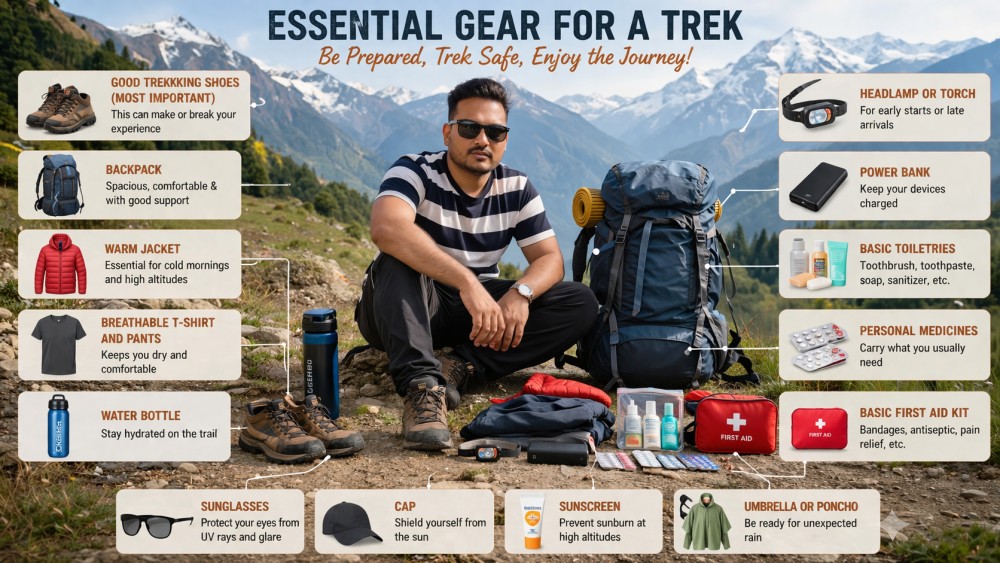
These are the few things that actually matter on your first trek:
- Good Trekking Shoes (Most Important): This can make or break your experience
- Backpack (Comfortable & well-fitted): You’ll be carrying this for hours
- Warm Jacket (Layering is key): Weather in the mountains changes quickly
- Water Bottle: Staying hydrated is non-negotiable
- Breathable T-shirt and Pants: Helps regulate sweat and keeps you comfortable during long trekking hours.
- Headlamp or torch: Essential for visibility during early starts, late finishes, or at campsites.
- Power bank: Keeps your phone and essential devices charged when there’s no electricity.
- Basic toiletries: Helps you maintain hygiene even in remote mountain conditions.
- Personal medicines: Important for managing any existing health conditions during the trek.
- Basic first aid kit: Useful for handling minor injuries like cuts, blisters, or headaches.
- Sunglasses: Protect your eyes from harsh sunlight and glare, especially at high altitudes or snow.
- Cap: Shields your head and face from direct sun exposure during long walks.
- Sunscreen: Prevents sunburn caused by strong UV rays in the mountains.
- Umbrella or Poncho: Keeps you dry and protected during sudden rain or unpredictable weather.
My advice: Start simple. Don’t chase expensive gear, as you can always upgrade later.
If you want a complete breakdown of trekking essentials (with detailed explanation), check out my detailed guide on Trekking Essentials for Beginners
How to Pack for Your First Trek?
If there’s one mistake almost every beginner makes, it’s carrying too much.
You think you might need everything, but on a trek, every extra kg feels heavier with every step.
I’ve made this mistake myself, and trust me — smart packing can make your trek 10x easier.
So here are some practical tips you should follow:
1. Start With a Checklist (Don’t Skip This)
Before you even open your backpack, create a checklist. This ensures:
- You don’t forget important items
- You avoid carrying unnecessary things
2. Pack Light — This is Non-Negotiable
This is the golden rule of trekking: Carry only what you truly need.
The lighter your backpack:
- The easier your walk
- The less strain on your body
- The more you enjoy the trek
3. Pack According to the Weather
Don’t pack “just in case” items. Pack based on the season and location.
For example:
- Summer trek → No need for heavy jackets
- Winter trek → Proper layering is essential
4. Pack Your Backpack the Right Way
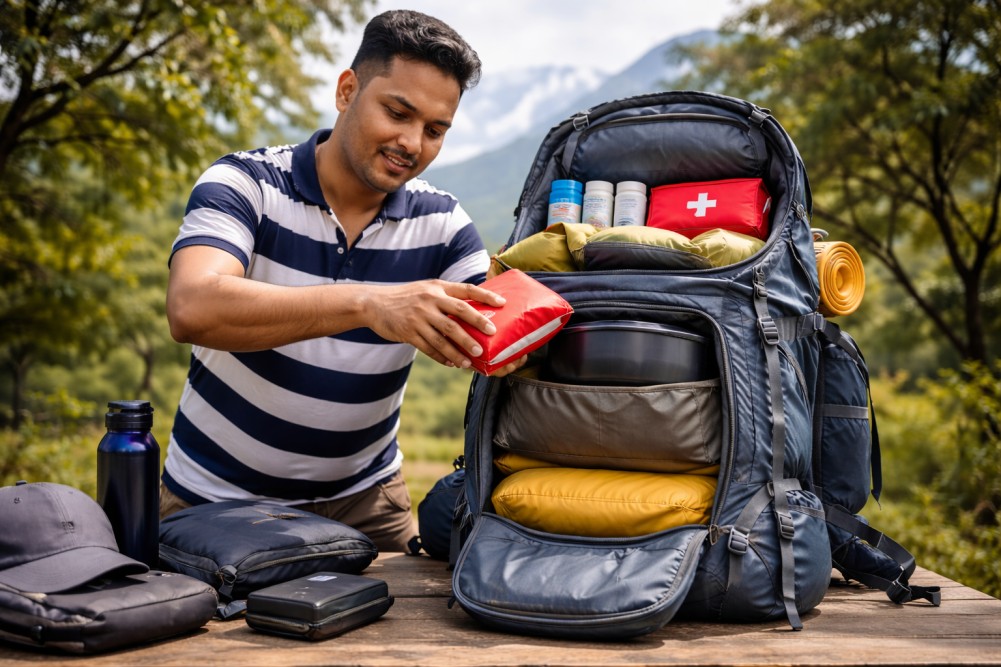
It’s not just what you pack — it’s how you pack.
So follow the rule: Heavier items at the bottom, and frequently used and lighter items at the top.
This helps you maintain balance and reduce strain while walking.
On the whole, Pack light. Pack smart. Pack only what matters.
Moving on if you want to know about packing in detail with various expert tips, check out this blog again:
Trekking Essentials for Beginners
On the Trail Tips (Make Your Trek Safer & Better)
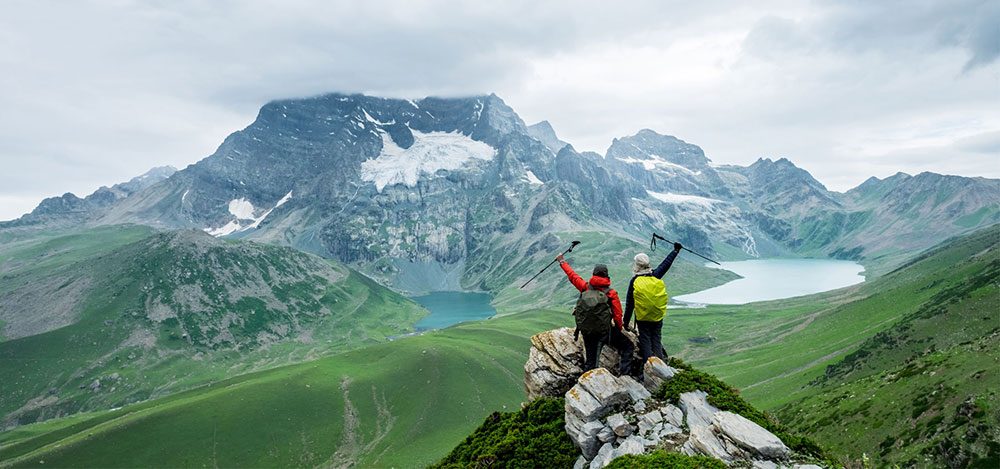
Now that you’ve:
- Chosen your trek
- Prepared yourself
- Packed your essentials
It’s finally time to step on the trail.
But before you begin, here are some simple yet powerful tips that can make your trekking experience safer, smoother, and more enjoyable.
- Start Your Day Early: Better weather, fewer crowds, and more energy
- Take Short Breaks: Rest for 5–10 minutes after every hour
- Walk Smart, Not Fast: Long steps on flat, short steps on steep sections
- Protect Your Skin & Eyes: Use sunscreen (SPF 50) and UV-protected sunglasses
- Wear Your Backpack Properly: Adjust hip, shoulder, and chest straps for balance
- Stick to the Trail: Avoid shortcuts, follow guides, and stay on route
- Stay Hydrated: Sip water regularly, don’t wait till you’re thirsty
- Eat Light & Nutritious Food: Keep your energy levels stable
- Follow Trekking Etiquette: Don’t litter, avoid loud noise, respect nature
Trekking is not just about reaching the destination — it’s about how you move through the journey.
The better your habits on the trail, the better your overall experience will be.
Want More Detailed Tips?
Check out my guide: Best Trekking Tips for Beginners You Must Know
FAQs on Trekking in Indian Himalayas
1. Is trekking safe?
Yes. Trekking is absolutely safe if you prepare properly and choose the right trek.
Most problems happen when people:
- Choose a trek beyond their level
- Ignore weather conditions
- Skip preparation
If you:
- Start with a beginner-friendly trek
- Go in the right season
- Follow basic safety practices
You’ll have a safe and enjoyable experience.
2. Do I need prior experience?
Not at all. Every trekker you see today started from zero, including me. Beginner treks are designed for people with:
- No prior experience
- Basic fitness
- A willingness to try something new
You just need to take that first step.
3. What is the best beginner trek in India?
The best options for beginners are
- Nag Tibba Trek
- Chopta Chandrashilla Trek
- Dayara Bugyal Trek
- Beas Kund Trek
- Brighu Lake Trek
4. How fit should I be?
You don’t need to be extremely fit. Basic stamina is enough.
If you can:
- Walk for 4–5 hours
- Do light physical activity regularly
You’re good to start. Even 2–3 weeks of preparation can make a big difference.
Final Thoughts: Just Start
Your first trek won’t be perfect. But it will be memorable.
It will challenge you, teach you, and change you in ways you don’t expect.
And once you experience that, You’ll keep coming back to the mountains.
Want to Start Your Trekking Journey?
If you’re planning your first trek or just exploring the idea:
- Follow my journey
- Learn from my experiences
- And maybe join me on a trek someday
You can also connect with me on Instagram or YouTube, or simply drop your questions in the comments. I’ll personally help you with your trekking queries.